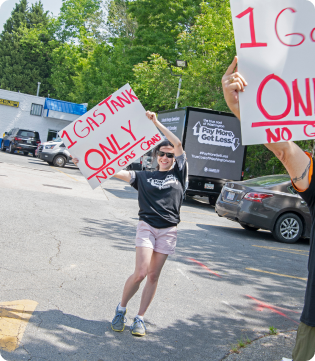
Economic Progress
America is in the middle of an economic crisis. Unsustainable government spending and burdensome regulations have driven up inflation and resulted in high food, energy, and housing costs — limiting the economic progress of nearly every American. That’s why we’re working to reduce wasteful spending, unleash energy abundance, and empower workers to prove prosperity is still possible and together we can reignite the American Dream.
Priorities
- Ending Washington’s wasteful spending through unified budgets and other responsible fiscal practices.
- Eliminating corporate handouts that pick winners and losers at the expense of hardworking taxpayers.
- Giving workers more freedom and flexibility through labor reform.
- Repealing the regulations that keep businesses, entrepreneurs, and communities from moving forward.
Recent Items
View More
ARLINGTON, VA—As the socialist agenda continues to strengthen its foothold on the Democrat Party, Americans for Prosperity is making the case for economic freedom, opportunity, and a future where people, not politicians, are in charge of their own lives. From national TV to podcasts to doors across the country, AFP is showing voters the stark […]
Wilsonville, Oregon — In case you missed it, Americans for Prosperity (AFP), Concerned Veterans for America (CVA), and The LIBRE Initiative hosted a rally featuring special guest Spencer Pratt on defending freedom against socialism. The evening featured a fireside chat with speakers, including a U.S. Navy veteran who fled socialism in Cuba. Speakers shared real stories […]
Arlington, VA — Americans for Prosperity (AFP) awarded three members of Congress “Pioneers for Prosperity” awards. U.S. Representatives Young Kim (CA-40), Kevin Kiley (CA-03), and David Valadao (CA-22) earned this distinction for their principled leadership in the 119th Congress. The award recognizes outstanding legislators who turn free-market ideas from the grassroots into policy that puts Californian […]