Recent News
Senators Daines and Merkley have proposed changes to the Senate’s standing rules to promote bipartisan, committee-led legislating.
The U.S. is projected to reach the debt limit as soon as February 2027, with the X-date falling between August and November 2027, according to Bank of America analysts. Some members have called for a lame-duck reconciliation bill to raise the limit this year, but a bipartisan deal next year looks more likely. History suggests […]
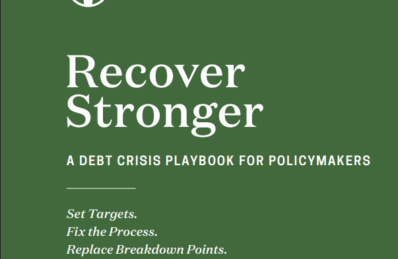
If a debt crisis happens, Congress should set clear targets, replace breakdown points, and fix its budget process alongside savings.
Federal debt is out of control. It drives up inflation and interest costs. It throws a wet blanket on opportunity. It is a clear and present danger to the American Dream. Last year’s $2 trillion in new borrowing pushed total debt above $40 trillion, far beyond each year’s domestic economic production. Higher interest rates swell […]

On Monday one of the fathers of the Hall-Rabushka Flat Tax, Robert E. Hall of Stanford University, was awarded the Nobel Prize in economics. While the Royal Swedish Academy of Sciences cited Hall’s work developing microeconomic foundations for macroeconomic stabilization policies as the basis for the award, a recurrent theme in his scholarship is individual responses to government policies.

Healthy budgeting gives legislators many reasons to finish on time. “On time” means before Congress leaves for the August recess. The White House and agencies could prepare better for the new fiscal year. Appropriators could rescind and reappropriate surplus funds well before expiration, further clarifying spending expectations for the White House.
Congress must become a responsible, nimble, effective forum for every elected representative and senator to develop proposals, put them before their colleagues, build coalitions, and forge consensus.
On this episode of ‘Right to the Point’, Rep. Lloyd Smucker and Kurt Couchman discuss the nation’s fiscal outlook, the drivers of federal debt, and potential solutions to addressing rising deficits.
More freedom can make housing, health care, energy, education, and much more work far better and be more affordable for all of us than it does today. That’s the path to prosperity. Not a one-time check that will push us deeper into debt and only fuel the inflation we need to get under control.