Part of the “Effective Budgeting” series.
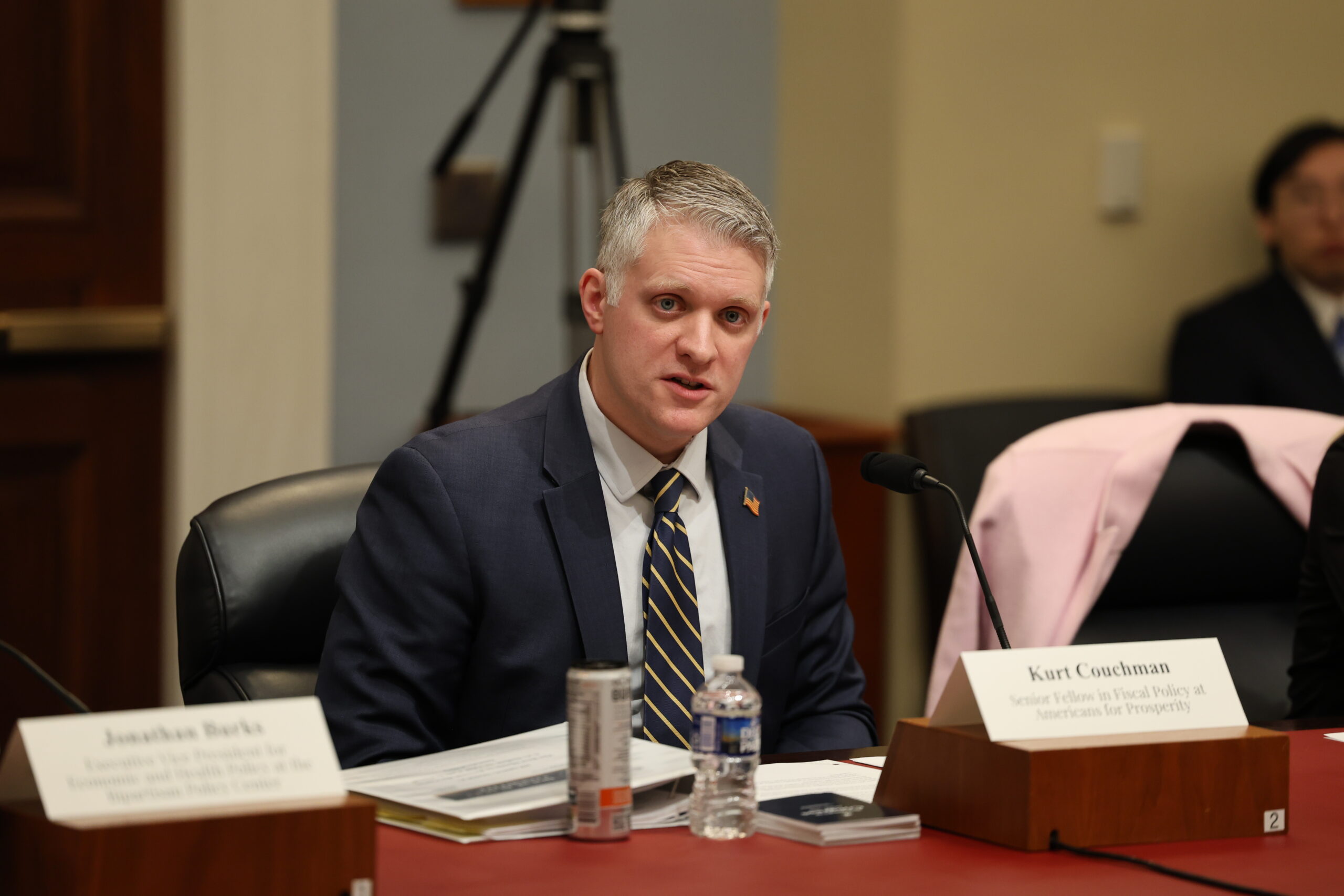
A bipartisan, bicameral consensus is emerging on bringing deficits down to 3 percent of GDP, and then on toward balance thereafter. I was honored that Chairman Arrington invited me to testify on that goal at the House Budget Committee last month.
After touching on the main themes of my testimony, we’ll look at mapping budget targets onto a more effective process.
From broad goals to practical targets
Good concept: A 3% deficit-to-GDP target is a good general goal. It is the most reachable round number to help policymakers stabilize and reduce the debt burden. Today’s high and rising debt puts pressure on inflation and interest rates, undermines opportunity and prosperity, and threatens a debt crisis.
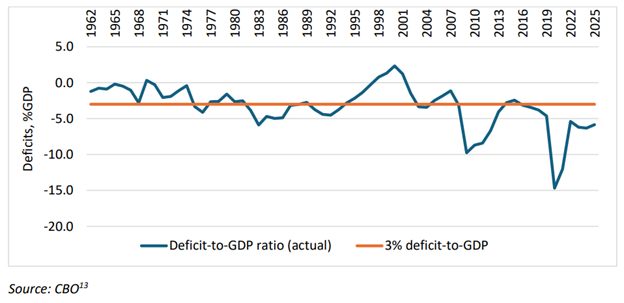
Needs translation: Yet deficit targets are not governance-ready: outlays, revenue, interest rates, debt, and GDP all vary beyond Congress’ control. That is why nominal deficit targets failed in the 1980s. Figure 1 shows the volatility in the debt-to-GDP ratio.
Figure 1: Deficits vary as a share of the economy
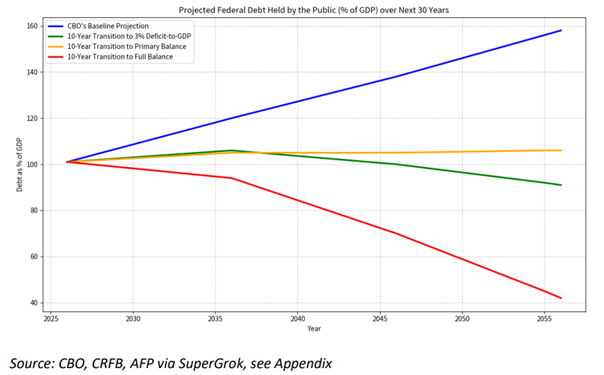
Implement with structural balance: A more stable and predictable target is primary structural balance: linking non-interest spending to revenue over the medium term. Figure 2 shows that primary balance or small surpluses can track the 3% deficit-to-GDP goal. Policymakers could, of course, talk about the 3% goal publicly while understanding that the mechanisms under the hood translate the goal into a governance framework.
Figure 2: Primary balance approximates a 3% deficit-to-GDP target
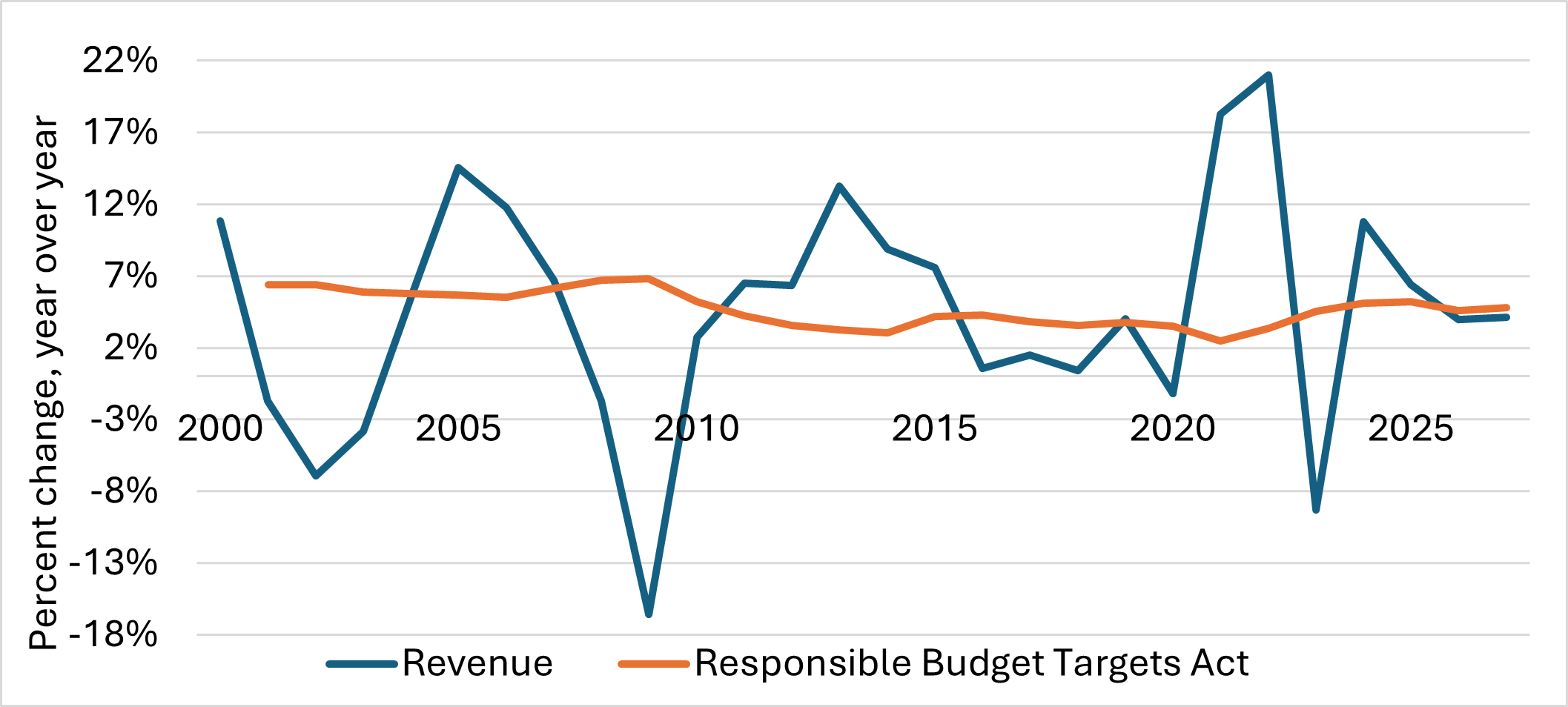
Stability > Volatility: Figure 3 contrasts the volatility of annual balance (blue) with the stability of the Responsible Budget Targets Act (orange), which resembles Switzerland’s popular debt brake.
Figure 3: Balance over the medium term for stable and predictable budgeting
Buttress with BBA: A constitutional rule would buttress the details of statutory targets. The Principles-based BBA, for example, is entirely consistent with the Responsible Budget Targets Act to implement a 3% deficit-to-GDP goal. Still, constitutional amendments require an exceptional consensus that has not yet emerged.
A budget process that works
Real budget: A congressional budget that includes all spending and revenue including tax expenditures would maximize Congress’ dials to meet targets. This would also responsibly empower all legislators to serve those they represent.
No shutdowns: Preventing shutdowns would focus members on the art of the possible, and a real budget (above) would give them far more opportunities to make their mark.
Smart enforcement: A new approach to automatic enforcement can be much more sustainable by spreading the pain throughout the budget, politically, and over time. Finally, Congress could revise the debt limit so it increases automatically if, and only if, the budget meets the agreed-on targets.
Mapping targets onto Congress’ annual budget act
Baseline targets: A glide path to 3% deficit-to-GDP targets, however defined, would likely start with a spending limit and a revenue floor. OMB would calculate them for the president’s budget request, and CBO would do so for Congress. Congress would retain all powers to adjust each within the deficit target.
Harmonizing allocations: Committee views and estimates would propose their priorities for consideration against those of others. The Budget Committees would lead negotiations on a budget resolution to allocate fiscal consolidation – or expansion – across committees.
Budget resolution breakdown: If Congress cannot pass a concurrent resolution on the budget, the Budget Chairs would set committee allocations from the baseline. If the sum of allocations exceeds overall targets, Congress can expect automatic enforcement and having to vote to raise the debt limit.
Budget-year allocations: Each committee would get a spending allocation under section 302(a) of the Congressional Budget Act. The House Ways and Means Committee and the Senate Finance Committee might also get a revenue floor.
Multi-year allocations: Phasing in changes over the budget window, however, would require multi-year targets in addition to the 302(a) allocation for the budget year. These could resemble reconciliation instructions but without the strictures of the Byrd Rule.
Sub-allocations: Each committee could then choose to suballocate spending authority to subcommittees like the Appropriations Committees do. Alternatively, the full committee could keep the books.
Enforcing allocations: Once a committee completes its work, CBO would advise the Budget Committees whether the committee had met its sub-targets from the budget resolution. If so, that committee’s contribution goes into the base text of the Budget-Committee-assembled annual budget Act for the floor. If not, baseline line-items stand in, and the committee’s members do not get their priorities in the base bill but can pursue them on the floor. Or next year.
Allocations through the years: An upgraded annual process lets Congress be nimble. If, this year, Congress goes a little too far, misses an opportunity, or just finds a better way, they can try again within a year. Today, enacting legislation often takes monumental effort and seems permanent, but the greater flexibility of regular, holistic budgeting would open the door to far better outcomes, especially as success compounds over time.
Healthy process begets healthy politics
Sound goals need sound budgets: Well-designed budget targets can empower Congress to meet and sustain them. A more effective congressional budget process would cover the entire budget and replace shutdown and debt-limit brinksmanship with a system that realistically engages American legislators to deliver better results.
Budgeting is politics: Once the institutional upgrades are in place, mapping each year’s budget targets onto Congress’ committees is a political challenge. Agreement on targets empowers members to contend on how to meet them. The competition of ideas and priorities within available resources is, after all, the purpose of a legislature.