AFP Housing Policy Roadmap
Housing costs are rising rapidly, burdening millions of Americans nationwide. Overly burdensome regulations related to housing, land use, and zoning make housing more costly and erect barriers to economic growth that inhibit opportunity and geographic mobility.
Reducing and reforming zoning, land-use, and building regulations would bolster property rights and foster economic opportunity, improving outcomes for workers, renters, homeowners, and landlords.
AFP is focused on enacting these foundational housing reforms in all 50 states. Though the precise impact of a given policy change may depend on state or regional housing market dynamics, demographics, or other state or regional factors, AFP has identified a variety of reforms that state leaders can pursue to reduce regulatory burdens and promote private property rights.
Download the Executive Summary
Highest Priority Options
Permit “Missing Middle” Housing by Right (e.g., Duplexes, Triplexes, Fourplexes)
Over 75% of residential land in the United States is zoned for only single-family homes, prohibiting any non-single-family home, such as duplexes (two-unit houses), triplexes (three-unit houses), and even townhomes, from being constructed on a given residential lot. Missing middle housing is housing between detached single-family homes and large apartment buildings, such as townhomes, duplexes, and triplexes. Permitting missing middle housing would significantly increase housing supply and choice, thereby lowering prices for prospective buyers and renters.
Single-family-only zoning also reduces property rights, as property owners cannot subdivide a home on their land without going through lengthy and costly variance or rezoning processes that are sometimes unsuccessful. These processes impede property owners from using their property and land as they see fit. Permitting missing-middle housing increases consumer choice and property rights by allowing for the construction of multi-family housing along with single-family homes.
In 2019, the Oregon legislature voted to allow the construction and use of duplexes in formerly single-family-zoned land in cities with over 10,000 residents and fourplexes on single-family-zoned land in the Portland metropolitan area. Between 2021-2024, the city of Portland permitted over 1,400 new missing middle and ADU projects in areas zoned for single-family homes, with missing middle units often priced $250,000-300,000 less than similar single-family homes.
In 2021, California passed SB 9, which effectively eliminated single-family zoning statewide. Additionally, both the Maine and Washington state legislatures have recently legalized missing middle housing by-right in many cities across those states. These zoning reforms have received widespread bipartisan support.
In 2023, AFP-Montana helped pass SB 323 which legalized duplexes by-right on any single-family-zoned lot in cities of over 5,000 residents, and mandated that the regulations on these duplexes may not be more stringent than those imposed on single-family homes that are also allowed on those lots.
Legalize Multi-Family and Mixed-Use Buildings in Commercial Zones and Allow Commercial-to-Residential Conversions
Many localities also have commercial-only zoning that limits where housing can be located. However, this was not always the case. Mixed-use housing had been quite common in urban and downtown areas, as many families owned businesses on the ground level and lived in housing units above their shops. Modern commercial-only zoning restricts housing options, increasing costs and limiting housing choices for residents.
States should legalize multi-family housing and mixed-use buildings in previously commercial-only zoned areas. Additionally, as increased remote work has reduced commercial office space utilization, states and cities should allow commercial buildings to be converted into apartments.
2026 AFP Policy Win
- North Carolina: Passed S. 445, which reformed several housing laws. Among those, the bill allows multi-family and mixed-use housing in commercial areas in cities of at least 80,000 residents in the Tar Heel State’s most populous counties.
Legalize Accessory Dwelling Units
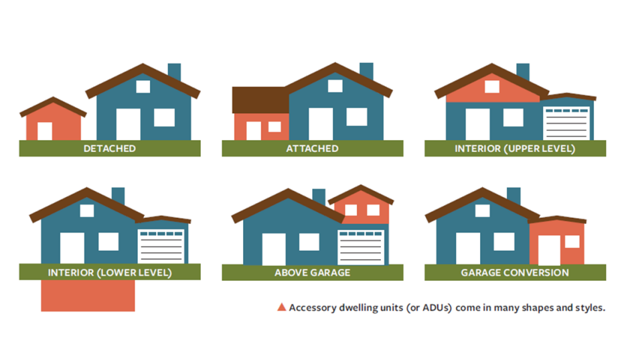
An Accessory Dwelling Unit (ADU) is an additional residential unit built on the same lot as an existing, larger home. ADUs can be a separate, detached residence or attached to the main residence (see drawing below). ADUs can be rented for extra income, used to house family members or friends, or turned into extra studio or office space. However, many local governments either ban or severely limit ADUs, restricting homeowners’ private property rights to use their properties as they see fit and worsening housing crises in those areas.
2026 AFP Policy Wins
- Virginia: SB 531 legalizes attached and detached ADUs by-right across the Commonwealth, although the legislation does not restrict parking or owner-occupancy requirements.
- North Carolina: S. 445 legalizes attached and detached ADUs in cities with at least 50,000 residents, allowing ADUs by-right on single-family lots, and restricting parking and owner-occupancy requirements.
Eliminate or Reduce Minimum Lot Size Requirements
Minimum lot size requirements mandate that housing lots be at least a certain square footage, increasing the cost of parcels of land to build homes. Minimum lot sizes also limit the number of homes that can be built in a particular neighborhood or area. These factors lead to building greater numbers of large and expensive single-family homes, rather than more affordable starter homes and townhomes. Reducing or eliminating minimum lot size requirements reduces regulations on property owners and allows for less expensive, more affordable single-family homes.
In 1998, Houston reduced the minimum lot size in the city’s downtown to just 1,400 square feet and expanded this change citywide in 2013. The reform has led to the construction of over 80,000 new starter homes and townhomes, and Houston remains one of the most affordable major cities in America. In 2024, Austin, Texas followed suit with its own minimum lot size reform, reducing the minimum lot size to 1,800 square feet citywide. And, in 2025, Texas passed SB 15, which reduces the minimum lot size for new single-family home developments in large cities statewide to just 3,000 square feet. Since going into effect, SB 15 has led to the approval of over 3,500 new single-family homes across the Lone Star State.
2026 AFP Policy Wins
- Kansas: SB 418 reduces the minimum lot size statewide to 3,000 square feet for single-family homes with less than 2,500 square feet of livable floor area. This reform does not mandate homes under 2,500 square feet on smaller lots but allows developers and property owners to build such homes if they so choose.
- Idaho: S. 1352 reduces the minimum lot size to just 1,500 square feet in new single-family home subdivisions of four acres or more.
Eliminate or Reduce Parking Requirements
Parking requirements mandate that houses and apartment buildings provide residents with designated parking spaces, reducing the available space for housing and increasing the cost of new homes and apartments. Additionally, commercial parking mandates significantly increase costs for small businesses, as parking mandates increase commercial rents and limit where new businesses may locate.
2026 AFP Policy Wins
- North Carolina: H. 162 removes all parking requirements for most new residential and commercial development across the state, except in coastal areas.
- Virginia: HB 888 limits parking requirements for housing within one-half mile of public transit. The requirement for single-family homes, townhomes, and duplexes is lowered to one space per unit, and the requirement for multi-family and mixed-use buildings is lowered to one-half space per unit.
Moderate Value
Repeal Restrictions on Manufactured Housing, Tiny Houses, and Alternative, Non-Stick Built Construction Methods
There are many state and local regulations on mobile and tiny homes that limit where they can be located, their uses, what materials the homes can be built of, and more. Additionally, states and localities also restrict or ban the use of new technologies and innovations in home building, such as 3D printed homes, factory-built housing, and modular homes. These restrictions reduce the supply of more affordable housing, limit choices for homebuyers and developers, and limit innovation in the housing market. In 2025, Montana passed SB 252, which prohibits localities from treating manufactured and factory-built housing differently from traditional, on-site built housing in local zoning regulations. Kentucky passed a similar bill in 2025, as well. Texas passed SB 785 in 2025, which allows manufactured housing by-right on more lots throughout the state.
2026 AFP Policy Wins
- Idaho: H. 800 allows single-family manufactured homes on lots where single-family homes are allowed, and allows multi-family manufactured homes on lots where multi-family housing is allowed.
- Virginia: HB 655/SB 346 allow manufactured homes on all lots zoned for site-built homes, and prohibit local governments from adopting zoning, development, or land-use regulations that treat manufactured housing differently from the allowed single-family site-built homes.
- Florida: HB 803 allows single-family manufactured homes on any lot zoned for single-family homes and prohibits local governments from treating single-family manufactured housing differently from site-built single-family homes.
Repeal or Prohibit Mandatory Inclusionary Zoning
Mandatory inclusionary zoning is the practice of requiring certain new housing developments to set aside a percentage of units for income-restricted housing. While this requirement ostensibly creates more affordable housing, research shows that mandatory programs actually increase overall housing prices. To increase inclusionary zoning unit buildings, local governments often entice developers with density bonuses — the ability to build more units than would otherwise be allowed under the area’s zoning laws. Rather than enticing developers with density bonuses, states and cities should eliminate or significantly reform residential zoning laws for all housing types.
Repeal and Preempt Rent Control Laws
Rent control is a price-fixing scheme that limits the rental increases a landlord can institute. While aimed at increasing affordable rental housing, rent control reduces the housing supply by diminishing the profit incentive to build more units. It also results in inadequate and worsening housing conditions for low-income people. Over 30 states have recognized the harms of rent control and prohibit local governments from enacting rent control laws. Accordingly, local governments should repeal any existing rent control laws, and state governments should preempt local government by banning rent control policies statewide. In 2023, Montana became the latest state to ban local rent control.
Enact “Shot Clock” Provisions
A “shot clock” bill gives local governments a clear time limit for issuing decisions on building permit applications. Any permit application that does not receive a decision (such as an approval, denial, or approval with conditions) by the time limit will be automatically approved and allowed to proceed to the next stage. Texas adopted a shot clock bill in 2019. Florida passed similar legislation in 2024 that applies to plat and lot permit approvals, and Kansas passed a shot clock bill in 2025 that gives local governments 60 days to issue a decision on building permits for single-family homes, or the application is automatically approved. The Pacific Legal Foundation has developed model legislative language for enacting shot clock legislation across the country. Shot clock bills have reduced bureaucratic delays, increasing housing production, and ultimately lowering home prices for prospective buyers.
2026 AFP Policy Wins
- Wyoming: HB 2 institutes clear time limits for reviewing and approving building permit applications for many single-family homes and duplexes. Localities must determine if applications are complete or incomplete within 10 days of receiving the application, and once a completed application has been returned, approve or deny the application in most cases within 30 days. If the locality does not issue a decision within 30 days, the application is automatically approved.
- Georgia: SB 447 creates permit approval deadlines for building permits and land disturbance permits. If a permit application is not approved or denied by the deadline, the local government must refund all associated fees collected from the applicant. The legislation also increases transparency by requiring localities with more than 250 annual building permit applications to maintain a public online dashboard with permit application information, timelines, status updates, and any application deficiencies the applicant may need to remedy.
Repeal or Reform Protest Petitions
Protest petitions allow a small minority of nearby property owners to stop rezonings in their neighborhood. These petitions trigger a supermajority vote requirement for local government approval of the rezoning and can even occur after the local government has approved the rezoning, thus triggering a second vote. Protest petitions reduce property rights and circumvent the normal approval and democratic process.
In 2025, AFP-TX helped pass HB 24, which raises the threshold for a protest petition related to upzoning to 60% of owners of nearby property and reduces the local government override threshold to a simple majority. An ALEC model policy reforming protest petitions was passed at the 2025 annual meeting. In 2026, Kansas eliminated protest petitions for single-family homes as part of SB 418.
Eliminate or Reform Building Height Restrictions
Building height restrictions limit skyscrapers and apartment buildings, especially in cities and downtown areas. These restrictions reduce the number of apartments that can be built, increasing prices in urban areas and reducing choice and property rights for developers, homeowners, and renters. For example, the building height restrictions still imposed on Washington, D.C., through the Height Act of 1910, have restricted development in downtown D.C., reduced the supply of both housing and commercial space, and increased housing costs in the District. In 2025, Montana passed SB 243, which prevents local authorities from imposing a height restriction of less than 60 feet on buildings in downtown, commercial, and industrial areas.
Lower Value
Eliminate Urban Growth Boundaries
Urban Growth Boundaries are boundaries around city centers that limit housing and commercial development outside the urban area. By limiting housing development, UGBs raise the cost of housing, making cities less affordable.
Allow Single-Room Occupancy Housing
In the first half of the 20th century, SRO housing (such as rooms in boarding houses) provided a quick and affordable housing option for single adults and low-income individuals. However, since the 1970s, many localities have banned SROs. These bans have reduced the supply of very low-cost housing and limited property rights, as many homeowners face significant regulations on renting spare rooms in their own homes.
Allow Single-Stairway Apartment Buildings
Single-stairway buildings are common in Europe but are banned in many cities in the United States. Allowing single-stairway apartment buildings would increase housing supply and affordability. In 2024, Virginia passed HB 368 to explore allowing single-stair buildings. And in 2025, both New Hampshire and Texas passed laws legalizing single-stair apartment buildings. In 2026, both Idaho and Michigan legalized single-stair apartment buildings.
Allow Third-Party Reviews and Inspections
Third-party reviews allow private, licensed, independent architects, engineers, and other professionals to review building plans, permit applications, and perform inspections. Allowing third parties to perform inspections and reviews reduces delays and costs for developers and builders, as they no longer have to wait for government-employed inspectors to perform the work. This reform increases choice and competition without sacrificing safety and quality, as private reviewers must still be licensed in their field, local authorities must still sign off on the inspectors’ reports, and third-party reviewers bear liability for their work. In 2024, Tennessee legalized third-party inspections and reviews, and New Hampshire followed suit in 2025. In 2026, Kansas SB 418 permits local governments to allow third party reviews and inspections if applicants have been waiting for such reviews or inspections for at least 30 days.
Create a Housing Task Force
To start the process of zoning and land-use reform at the state level, an executive branch task force or special legislative housing committee can provide a platform and venue for legislators, housing policy experts, state-based advocates, and other stakeholders to discuss and formulate concrete housing reform proposals. Montana Governor Greg Gianforte convened such a task force in 2022, which laid the foundation for numerous zoning and land-use reforms that the state has passed in recent years. In 2025, New Hampshire passed HB 399, which creates a similar legislative committee to explore and propose zoning and land-use reforms in the Granite State.