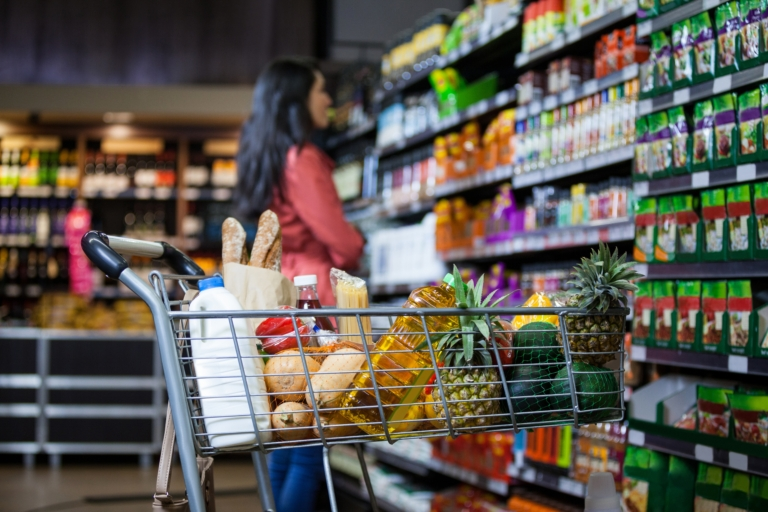
Month after month, you fill your cart with the same groceries, but the total keeps going up. Grocery costs have become a real burden on families.
There are a lot of myths out there about why your grocery bill is higher.
Let’s break down what’s really driving higher grocery prices — and some practical solutions that could actually help bring them down.
Myth 1: “Grocery costs are rising because stores have just decided to charge more.”
Some people say high grocery prices are just about corporate greed. The idea is that stores are simply charging more because they can. But retailers know making things more expensive turns off customers.
The truth is, a number of factors drive grocery prices: Labor, shipping, regulations, and inflation all play a role. When these input costs go up, shelf prices follow.
Public policy decisions drive a lot of these costs.
American families shouldn’t have to be a shock absorber for Washington’s choices. Policymakers can help bring down high grocery costs by reining in overspending, which drives inflation.
Myth 2: “Energy has nothing to do with what groceries cost.”
Another myth: Fuel prices have nothing to do with your grocery bill.
Energy costs are built into the price of milk, bread, and every other product in the grocery store. These costs show up throughout the supply chain. Farming, processing, and refrigeration all depend on energy.
When energy is plentiful and the supply is reliable, these input prices fall.

But right now, delays and uncertainty in the permitting process can raise costs. Lawmakers can help by making it easier to build energy infrastructure faster. They just need to take the opportunity to fix it.
Myth 3: “Your grocery bill is only about food — shipping rules don’t matter.”
It might feel like your groceries just magically appear on store shelves.
In reality, shipping costs are a major price multiplier, especially for items that travel long distances or require refrigeration.
Regulations that protect certain shippers from competition actually raise grocery bills.
For example, a federal law called the Jones Act requires goods shipped between U.S. ports to use American-built and operated ships. This law dramatically raises shipping costs by limiting competition.
When it’s easier and cheaper to move goods, grocery prices can come down.
Myth 4: “Global supply chains don’t affect what families pay here.”
In today’s interconnected world, supply chains are global. Products on grocery store shelves depend on ingredients and materials sourced from around the world.
When supply chains are disrupted by global instability or policies that make it more expensive to source or move goods, costs rise across the system. Those costs are ultimately passed on to families at the checkout counter.
Keeping groceries affordable means keeping supply chains stable and avoiding unnecessary cost increases.
Myth 5: “Nothing can change — families just have to ‘deal with it.’”
Another big myth about your grocery costs is that nothing can be done about them.
While we can’t cure inflation overnight, other reforms could ease pressure by expanding supply, removing bottlenecks, and helping workers adapt. That includes making it easier for people to find jobs and for businesses to hire and grow. When businesses can hire, grow, and deliver products more easily, costs can come down.
The pain you are feeling at the grocery store is not inevitable. Affordability will be achievable when Washington lawmakers:
- Rein in inflation-driving overspending
- Make it easier to build energy and infrastructure
- Reduce shipping and supply chain barriers
- Help businesses hire and grow
Learn how these reforms could help lower your grocery bill. Click here to learn more about AFP’s Affordability Agenda, which will reduce your grocery shopping costs.