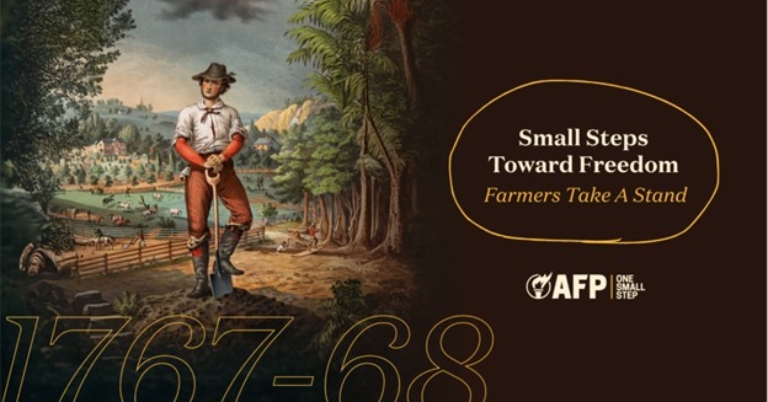
The year is 1767. You’re John Dickinson, a Pennsylvania lawyer, finishing a day at your office, when you hear the news: Parliament has raised taxes on the colonies — without your consent.
The Townshend Acts make everyday items like paper, tea, paint, and glass much more expensive at the order of lawmakers you did not elect living across the sea.
You’re outraged. You’re also thinking of the farmers who’ve spent months planning before harvest — they borrow, make agreements, and depend on steady rules. Suddenly, a far-off government changes the rules without consulting them.
You know it’s not about tea or paper. It’s the principle of it. If a small group of people can suddenly decide your money is now theirs, what’s next?
So, you decide to do something about it.
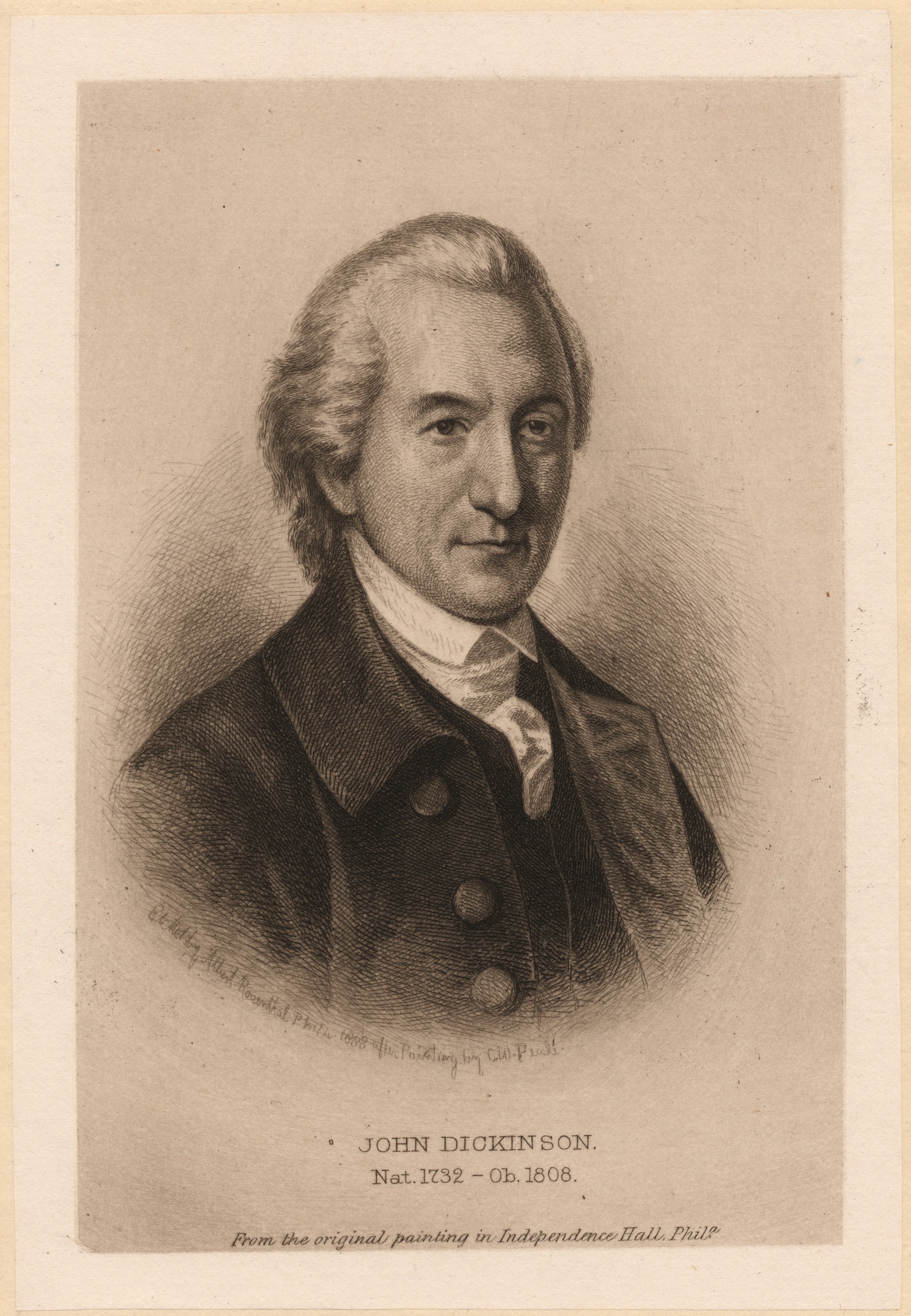
Instead of calling for violence or stirring up rage, you start writing. Your essays, later published as “Letters from a Farmer in Pennsylvania,” explained that Parliament has no right to tax you if you’re not represented in it.
The letters spread quickly from colony to colony, sparking what might have been America’s first organized, nationwide grassroots campaign. Public pressure — including Dickinson’s letters — helped lead Parliament to repeal most of the taxes.
And while Dickinson’s fight might have occurred more than 250 years ago, his efforts leave us three key lessons that we can apply today.
Economic prosperity needs predictable and legitimate rules to thrive. It grows under the rule of law — when citizens know the rules, trust they apply equally, and can plan for the future.
Farmers, shopkeepers, and families cannot plan their lives when policies change without warning. If one arbitrary regulation or tax hike can push you into bankruptcy, long-term prosperity isn’t possible.
That’s the result of a government that acts erratically and arbitrarily.
That’s as true today as it was then.
Take the looming expiration of the 2017 Trump tax cuts as an example. If it weren’t for the Working Family Tax Cuts, hardworking Americans would have seen a massive tax hike this year.
While we dodged that bullet, Americans still wrestle with decisions made far from their communities — rules that affect livelihoods but feel disconnected from consent and make it harder for farmers, business owners, and hardworking Americans to thrive.
The best way to respond against an arbitrary government is with organized, peaceful citizen action, not disorganized, rageful mob violence.
Dickinson rejected calls for rash action and instead appealed to principle. He knew true freedom is not a license to wreak havoc. He believed that a free people should defend their rights without tearing down the system that protects them.

Moreover, disorganized mayhem would have caused more economic harm than the very taxes he was trying to fight.
Today, just like back then, disorder and apathy tend to offer no results and no relief.
Americans can achieve far more success by organizing relentlessly and keeping government accountable with lawful, peaceful, and effective civic engagement.
Ordinary people can achieve extraordinary things.
Before there were generals or presidents, there were engaged citizens. And without them, there would have been no Revolution to lead.
The early resistance to British rule was not directed solely by celebrated figures like George Washington or Benjamin Franklin. It was merchants, farmers, and tradesmen who organized, petitioned, and persuaded — and in doing so, helped shift public opinion and compel Parliament to reconsider its course.
Today, Americans continue to debate the proper role of government.
When Americans feel that decisions are made without accountability, frustration grows. But frustration alone changes nothing. Dickinson’s example reminds us that persuasion, coalition-building, and principled civic action are how durable change begins.
Farmers deal with complex regulations, business owners track shifting policies, families struggle to make ends meet, and many people feel that things can’t continue as they are.
It’s then that we must apply Dickinson’s three lessons:
John Dickinson’s fight shows us that America did not begin with chaos. It began with petitions, pamphlets, and principled citizens insisting that power be restrained by law.
From Pennsylvania farmers in 1769 to those still working the land today, the lesson is the same: Prosperity requires stable rules, not arbitrary power.
The One Small Step campaign exists for moments like this — to remind us that lawful, peaceful engagement has always been the American way.
History doesn’t move itself. Ordinary Americans do — one small step at a time.
© 2026 AMERICANS FOR PROSPERITY. ALL RIGHTS RESERVED. | PRIVACY POLICY
Receive email alerts to learn how to get involved