Since the Loper Bright decision ended Chevron deference, lawmakers and regulators have made strong strides in cutting out costly and burdensome regulations responsible for hampering the energy industry. Americans for Prosperity Foundation’s new Recasting Regulations Tracker follows this effort, mapping every proposed and finalized rescission stemming from Loper Bright Enterprises v. Raimondo and the administration’s deregulatory executive orders. These reforms matter because excessive regulatory barriers are a key factor contributing to the higher energy costs imposed on American families and businesses.
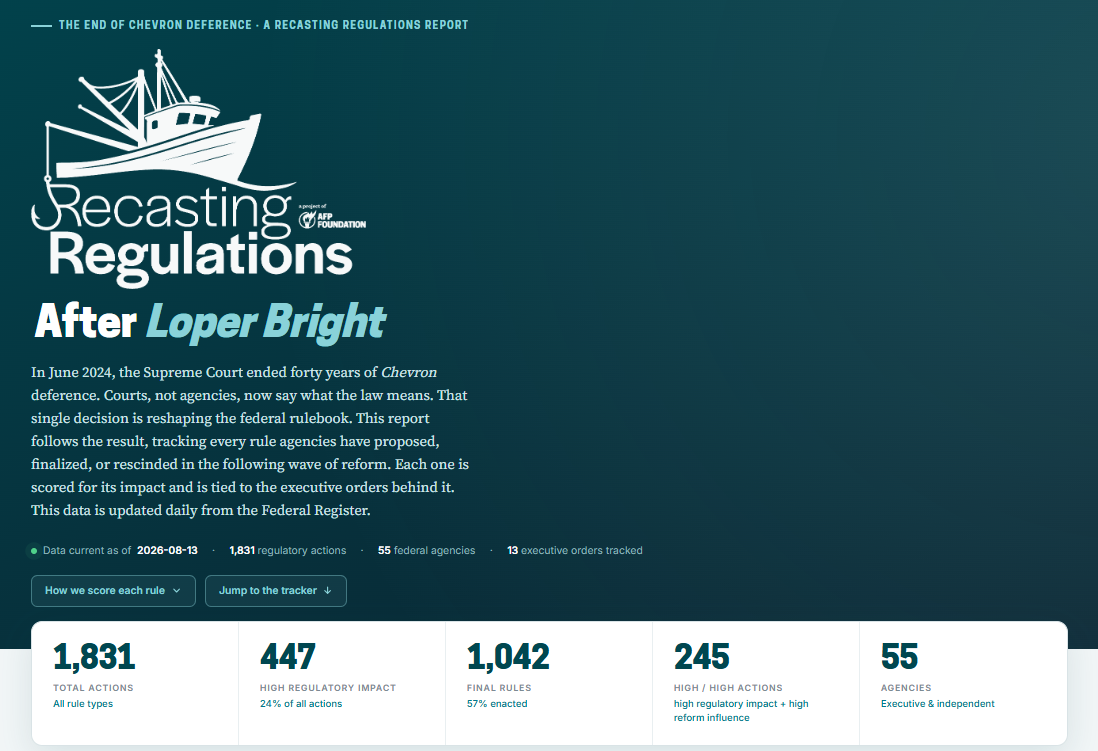
Out of all the many revised or removed regulations, three stand out for their disproportionate impact on energy costs. Those are the rescission of the Environmental Protection Agency’s (EPA) Endangerment Finding, the Nuclear Regulatory Commission’s decision to revise how the agency implements the National Environmental Policy Act (NEPA), and the Congressional Review Act disapproval of several California emissions waivers. These regulatory actions have the potential to remove the anchor weighing down the energy industry and keeping costs unnecessarily high for Americans.
Rescission of the EPA’s Endangerment Finding
In 2009, the EPA released a formal scientific finding claiming that several greenhouse gases were a clear and present threat to Americans’ health and safety. This finding, coupled with the leeway granted by Chevron deference, became the foundation for the agency’s many cuts in climate-related rulemakings and other regulations. Regulations such as tailpipe standards, power plant emission rules, and fuel economy standards, though well intentioned, were a key factor behind the higher prices for cars, gasoline, fuel, and electricity, as well as higher prices throughout supply chains reliant on them.
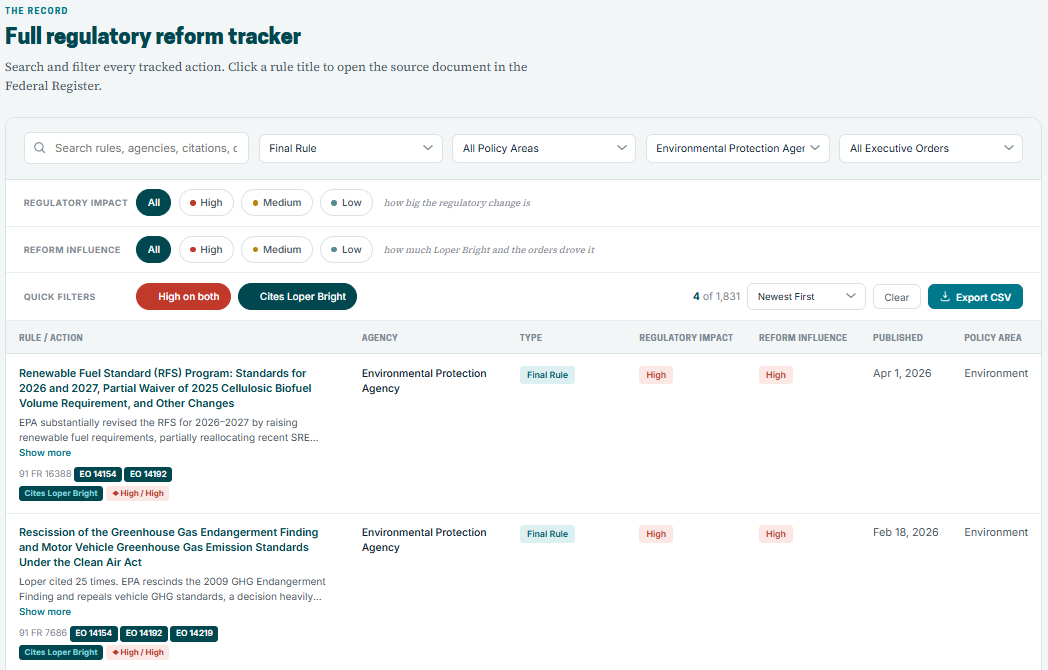
Americans for Prosperity and other pro-market organizations, were incredibly vocal and called for the rescission of the finding, which Executive Order 14154 later directed the EPA to remove. The rescission of the Endangerment Finding, which cites Loper Bright twenty-five times and is a huge step forward for common sense regulation that protect against clear and direct environmental harms while still allowing key products and services to remain affordable for all Americans.
Reforming Nuclear Energy Reviews
Prior to the current administration, the Nuclear Regulatory Commission’s reviews of new reactors and plant designs were extremely costly and time consuming, a key factor why nuclear energy was not commercially viable. The agency’s decision to revise how it implements NEPA is a common-sense decision and allows for relatively expedited reviews compared to the agency’s prior way of conducting business.
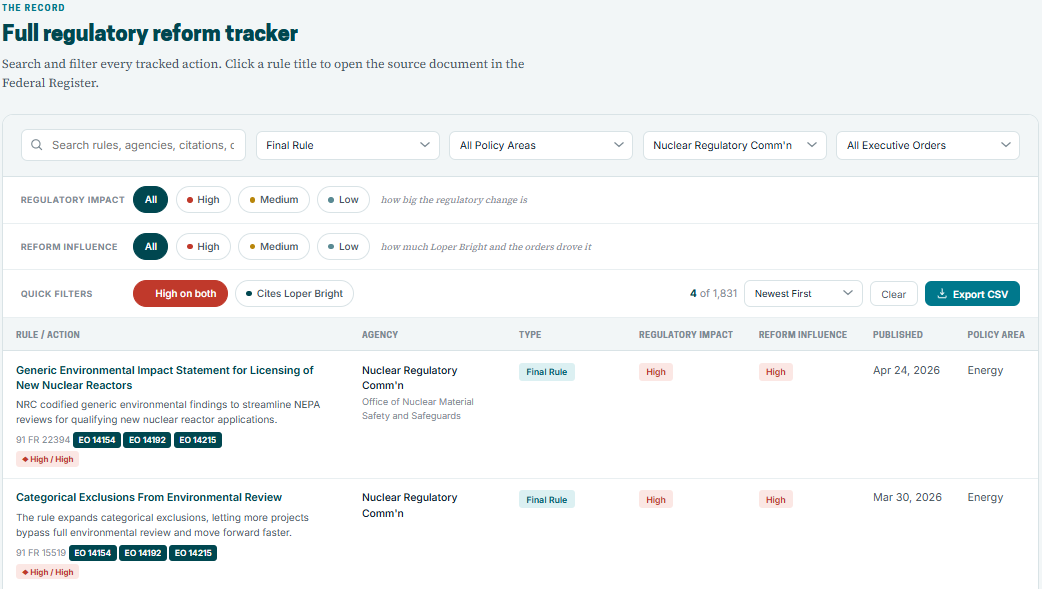
As part of the agency’s broader reform effort, it expanded categorical exclusions to include things like “previous disturbed areas” to reduce redundant reviews, set limits on the number of pages in applications and set firm deadlines for when reviews are to be completed. Its latest rulemaking efforts would further narrow reviews to matters within the agency’s statutory authority. These simple reforms have the potential to vastly reduce the time and cost of getting a new nuclear reactor or facility approved and built. At a time when the cost of energy and electricity is a key pain point, clearing the regulatory pathways is a smart and prudent way to reduce costs.
Congressional Review Act Disapproval of California Emissions Waivers
In the summer of 2025, and after sustained advocacy from Americans for Prosperity, Congress and the Trump administration ensured the removal of several EPA waivers granted to California that allowed the state to set its own, stricter emissions regulations. The waivers inadvertently made California the kingmaker of vehicle emissions policy, as the Clean Air Act amendments allowed other states to opt into California’s regulations instead of adhering to the federal standard; as of 2025, 17 other states adjusted their standards whenever California revised theirs.
Under the most recent EPA waivers, California mandated that 35% of all vehicles available for purchase in the state to be zero emissions by 2026, and all new passenger-vehicle sales to meet zero-emission requirements by 2035, effectively banning the sale of new gas-powered cars. Similar phase out periods were scheduled for larger trucks and commercial vehicles. In line with Executive Order 14154, their removal fulfilled a broader call to end state emissions waivers that arbitrarily restrict the sale of gasoline-powered vehicles.
These waivers represented the same expansive view of regulatory power expressly curtailed by Loper Bright. Through an exception granted by an unelected federal agency, California imposed its political preferences on the national auto market. Without the rescission of these waivers via the CRA process, California regulators were poised to completely reshape the auto market based on arbitrary climate goals, not on direct harms or economic costs. Congress’s action therefore advanced the administration’s broader reform efforts that return regulation to clear statutory authority, preventing agencies from imposing major regulatory hurdles without congressional approval. The emission standards would have resulted in skyrocketing auto costs, and likely would have increased the cost of the transportation of goods, ultimately creating a new inflationary cycle Americans would have suffered under. The removal of these waivers saved Americans and small business owners from certain disaster.
More Reforms Are Needed
These three regulatory reforms, while only a snapshot of current efforts, highlight the return of common-sense rulemaking. Had these regulations remained in place, they likely would have continued to cause significant harm by raising costs even higher or blocking the development of key technological advancements. Moving forward, lawmakers and regulators should improve the federal regulatory process in two ways:
- Continue to adhere to the Supreme Court’s decisions in Loper Bright and Seven County, and seek opportunities to remove unnecessary regulations that cause more harm than good;
- Approach rulemaking with common sense and objectively weigh the pros and cons of rulemakings and project approvals.
Simply put, Congress needs to continue its efforts to remove unnecessary layers of regulation embedded across industries. For the energy industry specifically, the best thing Congress can do is reform the federal permitting process and clear the way for much needed energy development and investments. The Recasting Regulations Tracker will continue to show these reforms as they happen, analyzing their impact on reducing the regulatory burden imposed on the American people.
James Morrone is a Energy Policy Analyst at Americans for Prosperity.