
Every regulation has a cost.
Sometimes that cost is obvious. Other times, it quietly works its way through the economy, making it more expensive to build homes, open businesses, expand factories, or deliver goods to customers.
South Carolina just took a major step toward addressing those costs.
On June 30, Gov. Henry McMaster signed the Small Business Regulatory Freedom Act into law. The legislation adds new oversight to the state’s rulemaking process, ensuring that major regulations receive greater public scrutiny before taking effect.
The new law marks a major victory for Americans for Prosperity–South Carolina, which made regulatory reform one of its top legislative priorities and worked with lawmakers, small-business owners, and grassroots activists to build support for its passage.
For South Carolina’s more than 530,000 small businesses — which account for nearly every business in the state and employ almost half of its workforce — this change matters.
What the new law does
Before this reform, state agencies could adopt major regulations without a direct vote from elected lawmakers, even when those rules carried significant economic consequences.
The new law changes that.
Among its reforms, the law:
- Requires legislative approval for regulations expected to cost at least $1 million over five years.
- Requires periodic reviews of existing regulations to determine whether they are still necessary.
- Expands opportunities for small businesses to provide input before new regulations are adopted.
- Gives lawmakers greater oversight of the state’s regulatory process.
Major rules that affect businesses, workers, and families should be reviewed and approved by elected officials who answer directly to voters. This new law ensures that happens.
Why regulatory accountability matters
Regulations often begin with good intentions.

But when rules become overly complex, outdated, or unnecessarily expensive, consumers and small businesses usually pay the bill.
A builder spends more time waiting for permits. A manufacturer delays expanding a facility. A small business hires an accountant instead of another employee.
Those added costs reach everyday Americans at the checkout line, when looking for new housing, or on their utility bills.
When unnecessary and costly regulations are rejected, entrepreneurs have more room to build and invest in their communities. That can lead to more jobs, lower prices, and long-term prosperity.
A grassroots victory for South Carolina
This reform did not happen on its own.
AFP–South Carolina made the Small Business Regulatory Freedom Act one of its top legislative priorities in 2026.
AFP–South Carolina and activists from Concerned Veterans for America worked alongside lawmakers and policy partners, engaged small-business owners across the state, and mobilized volunteers to make phone calls and knock doors.
Those conversations helped turn public support into lasting reform.
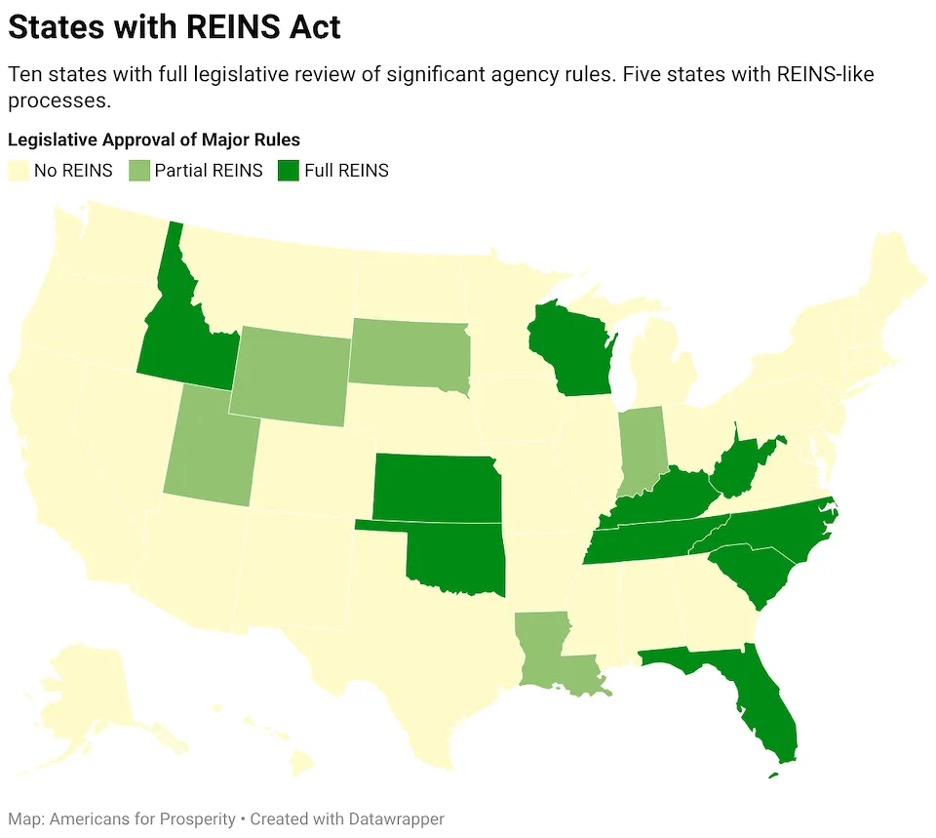
South Carolina also became the third state this year — joining Tennessee and South Dakota — and the 10th overall to enact a REINS Act-style law since AFP launched this effort three years ago.
That growing momentum shows regulatory accountability is no longer just a policy idea. It is becoming a reality in states across the country.
You can see the map of states with REINS Act-style legislation below:
Building a stronger economy
The Small Business Regulatory Freedom Act does not eliminate regulations.
It helps ensure that costly regulations receive the transparency and oversight they deserve before they affect businesses, workers, and families.
That can create a stronger environment for entrepreneurs, encourage investment, and give businesses more confidence to expand, hire, and compete.
Over time, those decisions help strengthen local economies while easing the costs that eventually reach consumers.
South Carolina’s reform demonstrates what’s possible when citizens work together to make government more accountable.
Click here to learn more about how the REINS Act can supercharge American prosperity and bring down costs.