

Editor’s note: This is one installment in a One Small Step series exploring how our founding principles apply to policy change movements. See the series introduction and full collection here.
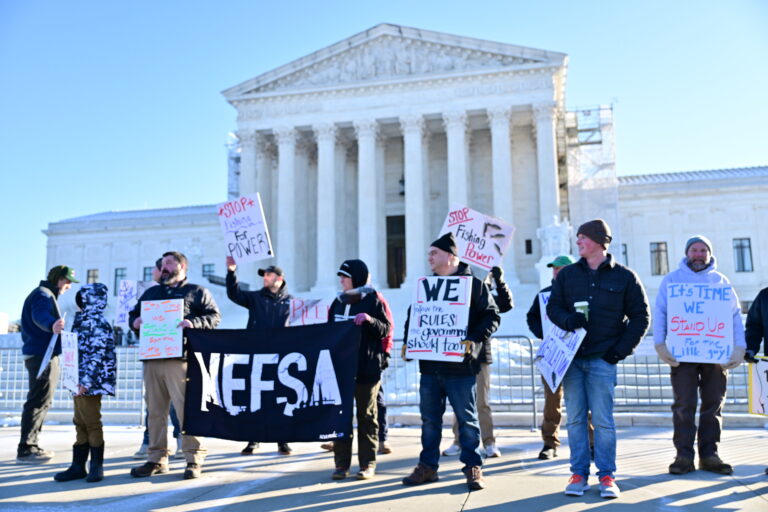
Our history is filled with figures who have shaped society, culture, and politics in fundamental ways. We teach our children about heroic figures like George Washington and Abraham Lincoln. But America’s story hasn’t only been written by famous presidents or generals. It has often been written by everyday people who confront something unfair, refuse to stand by, and take one small step to fix the injustices they see. That’s what makes the fishermen behind the Supreme Court’s 2024 blockbuster case, Loper Bright Enterprises v. Raimondo, so compelling. These fishermen weren’t chasing headlines; they were just trying to keep their way of life afloat.
Loper Bright is a story of ordinary Americans doing extraordinary things. Lawyers and jurists will rightly remember the case as a transformative moment in the history of administrative law. But the success of Loper Bright depended, in a real way, on the Supreme Court’s recognition of the compelling human-interest story behind the jargon and doctrine. At its heart, Loper Bright is a tale of the real-life impacts of government overreach. It’s the story of a few local entrepreneurs who cared about saving their family businesses and, ultimately, defending the principles of limited government that have animated this country since the Founding.
The Loper Bright fishermen—Wayne Reichle, Bill Bright, and Stefan Axelsson—live in Cape May, New Jersey. Cape May is a small town at the southernmost point of the state often noted for its summertime beach crowds, bird watching, Coast Guard presence, and family-run fishing boats that have plied the waters of the Atlantic since the late 17th century. If you show up at one of the fishing docks in town before sunrise, you can watch crews moving swiftly about, preparing to head out in search of the day’s catch. Cape May’s fishermen are part of a heritage industry that once played a prominent role in this country’s economy. Decades of increasingly intrusive regulation have changed that.
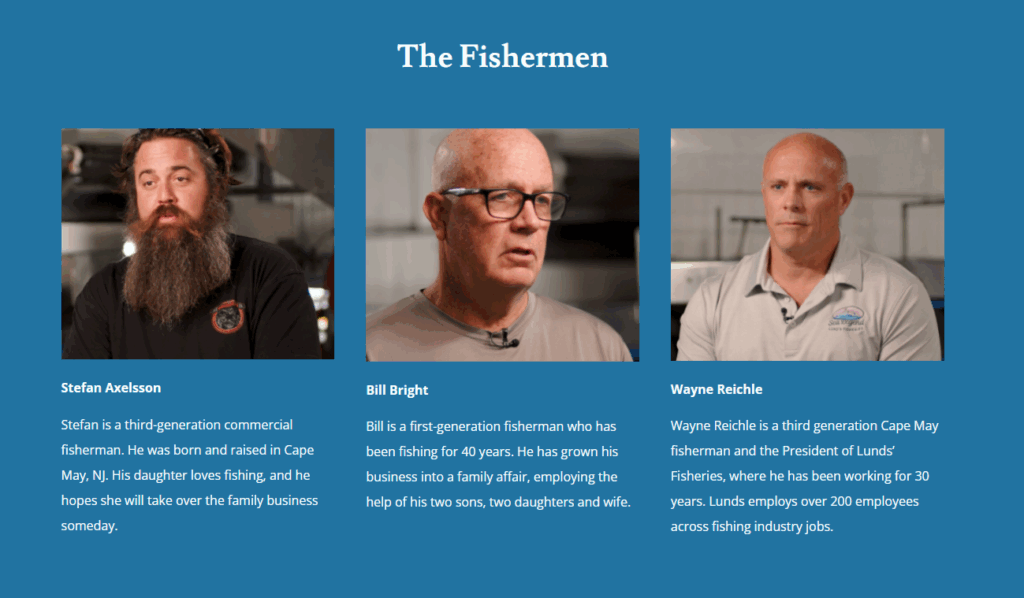
Wayne, Bill, and Stefan have always been passionate about how they make their living, and they’re proud of the ways in which they contribute to the local economy. Wayne, for example, is part of a multi-generational fishing family, whose business provides jobs for over 200 people. Bill uses his own catch to supply his family-operated seasonal dockside fish house. And Stefan—another multi-generational fisherman—is excited that his young daughter is eager to take over the family business someday. For all three men, fishing isn’t just a job—it’s about identity, community, and responsibility.
The tipping point for the trio was an outrageous regulation that the National Oceanic and Atmospheric Administration (“NOAA”) proposed in 2018. For decades, NOAA had paid for at-sea monitors to ride fishing boats. These monitors would watch the fishermen while they work, reporting data back to the agency. Once funds started to run low, NOAA needed to figure out how to keep its preferred discretionary monitoring programs running. For the herring fishery, regulators decided to require the fishermen to pay the monitors’ wages. The estimated impact of that change was terrifying: more than $700 per sea day on roughly 50% of all trips, totaling up to 20% of a ship’s annual returns. Given tight margins in the market, the government’s “pay-for-your-own-inspector” rule would mean that, on days when the fishing is poor, a crew might go home empty handed, but the government’s monitor still gets paid.
Wayne, Bill, and Stefan knew this was an intolerable result. NOAA had long taken advantage of ambiguities in federal law to devise increasingly burdensome regulations. But industry-funded monitoring crossed the line. The Magnuson-Stevens Act—the relevant statute governing domestic fishing—undoubtedly allowed the placement of monitors on boats; funding those monitors, however, was the agency’s responsibility. Congress had been clear in writing the law that costs like the monitors’ salaries could only be passed on to fishermen in discrete circumstances—like foreign fishing—and the herring fishery wasn’t one of them.
SoSo, Wayne, Bill, and Stefan went to court. They hoped an impartial federal judge would see injustice in the agency’s position. The notion that the government could force fishermen to pay a monitor’s salary on top of providing them a space on board the boat was akin to forcing a motorist to pay for a highway patrolman to ride along for the daily commute. But the judges’ hands were tied. The infamous Chevron doctrine deprived Wayne, Bill, and Stefan of their day in court.
The Chevron doctrine is named after a 1984 Supreme Court case in which the justices ruled that when a law is ambiguous or silent, a judge must defer to a regulatory agency’s interpretation, so long as it is reasonable. In other words, under the Chevron doctrine, federal courts were forced to abdicate their constitutionally mandated role of deciding the meaning of the law. For the fishermen, this meant supposed silence and ambiguities in the law about who is responsible for paying for at-sea monitoring effectively required the courts to rule in favor of NOAA. Put plainly: NOAA got the benefit of the doubt, and a thumb on the scale for their position.
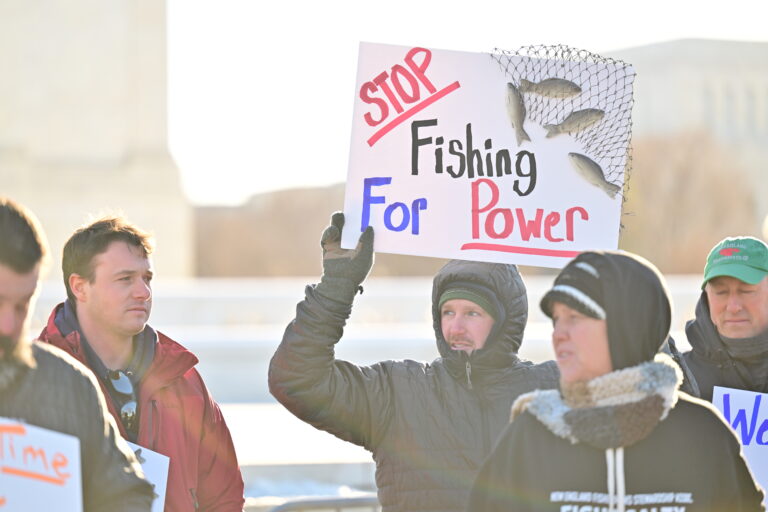
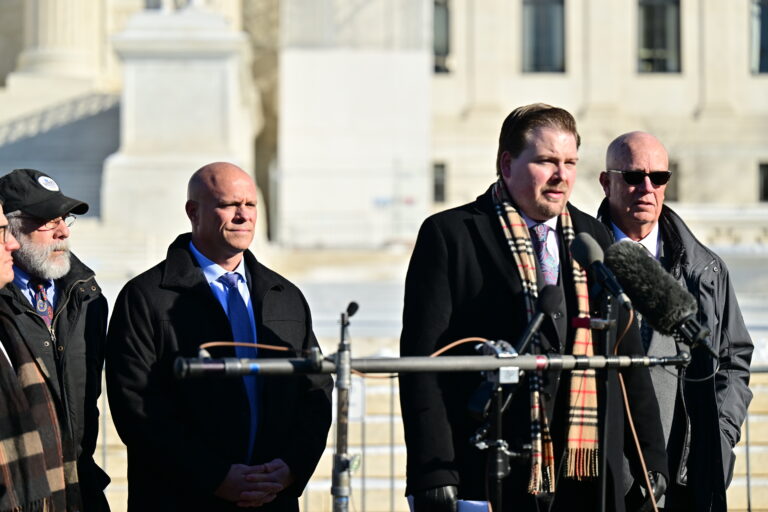
When the trial court and the appeals court both ruled for the government, Wayne, Bill, and Stefan didn’t give up. They took their case all the way to the Supreme Court. And they won. With its decision in Loper Bright, the Supreme Court overruled the Chevron doctrine and helped restore the proper balance of power between Congress, the Executive Branch, and the Judiciary. More precisely, the Loper Bright court clarified that judges reviewing agency action under the Administrative Procedure Act must provide their own best judgment about what the law means. Agencies like NOAA can still bring their expertise to the table, but they can no longer take advantage of “gaps,” “silence,” “ambiguity,” to avoid courts invalidating overbroad or textually indefensible regulations.
Surprising as it may be, the fight that Wayne, Bill, and Stefan started is not yet over. The Supreme Court ditched the Chevron doctrine, but the industry-funded monitoring requirement for the herring fishery is still on the books. The government continues to defend it, arguing it conforms with the best reading of NOAA’s statutory authority. For now, the case is currently paused while settlement negotiations are underway.
No matter how Loper Bright is resolved, Wayne, Bill, and Stefan will continue to serve as inspiring examples of what individual Americans can do when they are motivated to protect their livelihoods. These fishermen understood the threat that unchecked bureaucracy posed to their families. More importantly, they understood the root cause of the problem—the Chevron doctrine and its distortion of the separation of powers—and the need to fight for reestablishing the constitutional order envisioned by the Founders and Framers.
Our three fishermen know that, even if they lose their case, their fight will still have been a victory for the American people and the rule of law. Their story is a reminder that our constitutional heritage isn’t something automatically inherited. It is something that we must all fight to protect, one small step at a time.
NOVASPORTSPAGE.COM
Ryan P. Mulvey is Senior Policy Counsel at Americans for Prosperity Foundation. In his role at Cause of Action Institute, Ryan has served as lead counsel on Loper Bright Enterprises v. Raimondo since the initiation of the case.
© 2026 AMERICANS FOR PROSPERITY. ALL RIGHTS RESERVED. | PRIVACY POLICY
Receive email alerts to learn how to get involved