
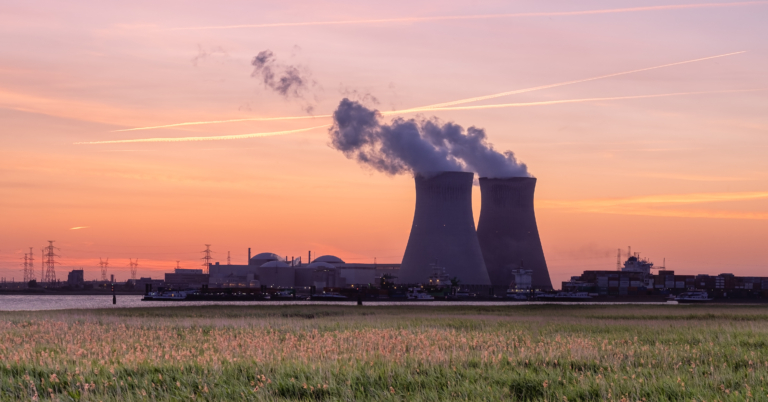
The U.S Department of Energy (DOE) recently announced plans to fast-track approvals for advanced nuclear reactors to bypass lengthy federal permitting reviews that delay the deployment of new energy. This move underscores policymakers’ realization that regulatory restrictions, not technological limitations, are a key barrier to accessing reliable, affordable, and abundant energy.
Advanced nuclear reactors, including small modular reactors, present an opportunity for safer, lower cost, and more flexible deployment compared to conventional large-scale nuclear plants. Despite decades of development, many projects remain trapped in years of long approval processes before construction can begin. These delays raise costs, discourage investment, and stifle the ability of energy developers to innovate and bring new generation capacity to the grid. For instance, regulatory uncertainty during the development of new nuclear reactors at Plant Vogtle contributed to substantial cost overruns and years of delays. Similar challenges affect the energy sector more broadly: the Atlantic Coast Pipeline, which would have helped to meet growing energy demand, was ultimately cancelled due to rising costs after years of litigation.
The DOE’s decision would exempt certain nuclear reactor projects from unnecessary federal reviews, including reviews triggered by the National Environmental Policy Act (NEPA). Under NEPA, federal agencies are designated to review the potential environmental impacts a project may have, a process that currently can take years. The NEPA review process is a costly chokepoint and can delay projects even if they have minimal environmental risks or are being built on existing federal sites with established safeguards. Even clean energy projects, such as the New England Clean Energy Connect, are delayed for years due to NEPA-related litigation. The length and multiple layers of review, coupled with extended litigation, slows energy development and raises costs while yielding no meaningful environmental protections.
The DOE’s approach to regulation seeks to tighten the regulatory process, ensuring reviews address actual risk, instead of imposing top-down restrictions that needlessly slow progress without improving outcomes. The significance of this move extends beyond nuclear energy. It underscores the broader challenge facing infrastructure and energy policy, an overburdensome federal permitting process. When it comes to energy generation, transmission, and infrastructure, regulatory delays frequently prevent the advancement of projects that would otherwise improve affordability and reliability.
Streamlining the approval process does not mean abandoning safety or environmental protection. Rather, it means focusing on genuine risks, creating a predictable permitting process, and eliminating redundant requirements. When agencies lack clear deadlines or consistent standards, the permitting process becomes a blockade on innovation and results in higher energy prices.
While the DOE’s actions are a step in the right direction, executive actions alone are not enough. Lasting and meaningful reform will require Congress to pass laws reforming the permitting process. Absent legislative reform, future administrations can easily reverse policy changes, imposing the same barriers that have constrained progress for decades.
If policymakers are serious about energy affordability, economic growth, and technological leadership, then permitting reform must be a key part of the solution. Faster approvals can spur private investment, accelerate innovation, and help deliver reliable, affordable energy to American households.
Nicholas Huff is a policy intern at Americans for Prosperity.
© 2026 AMERICANS FOR PROSPERITY. ALL RIGHTS RESERVED. | PRIVACY POLICY
Receive email alerts to learn how to get involved