You might be wondering, “Why can’t Congress balance the budget without a constitutional amendment?”
The answer is, they can. But they haven’t. And history tells us they won’t.
As the national debt continues to climb, crossing the $38 trillion threshold this year, Congress called on Americans for Prosperity Senior Fellow Kurt Couchman for his fiscal policy expertise.
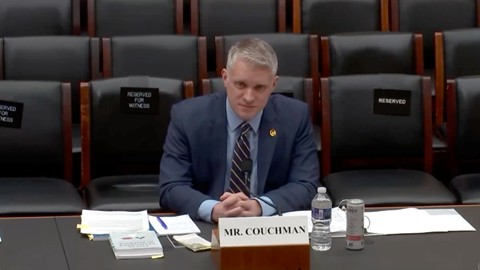
In his testimony before the House Judiciary Subcommittee on the Constitution and Limited Government, Kurt shared the urgent consequences of excessive deficit spending:
“The federal debt burden pushes up inflation and interest rates, crowds out investments that boost workers’ pay, polarizes politics, and risks debt crisis and default.”
Each year, decades of reckless government spending compound while Congress adds to the national debt, leaving American taxpayers with a hefty interest payment.
In Fiscal Year 2025, the bill was for over $1.2 trillion — that’s more than the entire defense budget merely for the interest on our massive debt.
As this burden brings us closer to a destabilizing economic crash, Congress has a narrowing window to change course.
One solution is to pass a constitutional amendment that requires Congress to pay off the nation’s debt and limit federal spending to match revenue.
Kurt explained how a Principled-Based Balanced Budget Amendment overcomes the traditional challenges of a balanced budget amendment:
By following this modern framework, PBBA offers a unique solution to achieve a balanced budget by amending the constitution.
But passing the legislation in Congress is a challenge of its own.
For a possible path forward, Kurt looked back to 1995 — the first (and only) time the House of Representatives passed a balanced budget amendment.
“The special rule for the floor established a competitive, queen-of-the-hill process: The most popular substitute amendment becomes the text for final passage. … To begin the process of rebuilding bipartisan support for a constitutional fiscal rule, the House could again employ a queen-of-the-hill competition.”
By considering multiple proposals simultaneously, members could identify the most widely supported amendment and increase the chances of its passage.
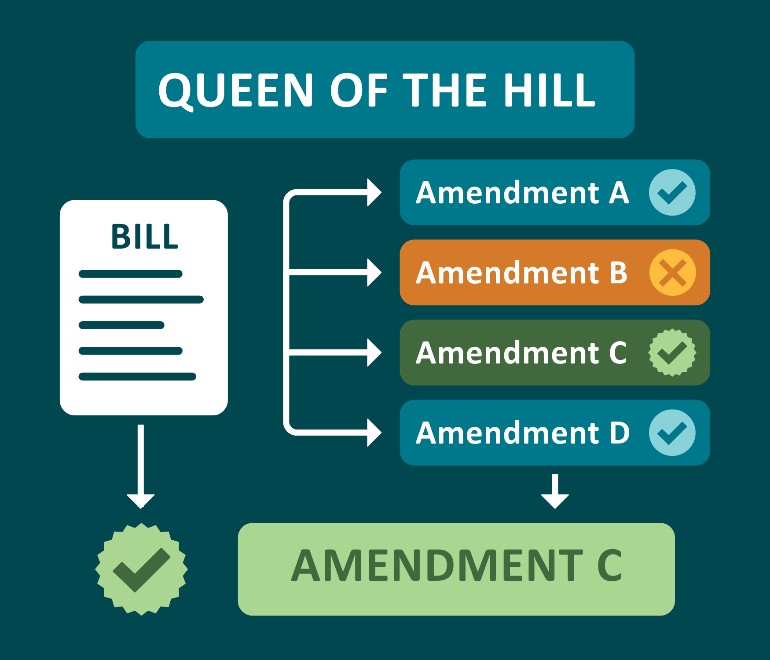
Although the 1995 amendment ultimately failed in the Senate by a single vote, its strategy could serve as a valuable blueprint to pass a modern balanced budget amendment.
With each budget season, Congress has had the opportunity to demonstrate fiscal restraint. Instead, lawmakers have increasingly favored short-term political incentives.
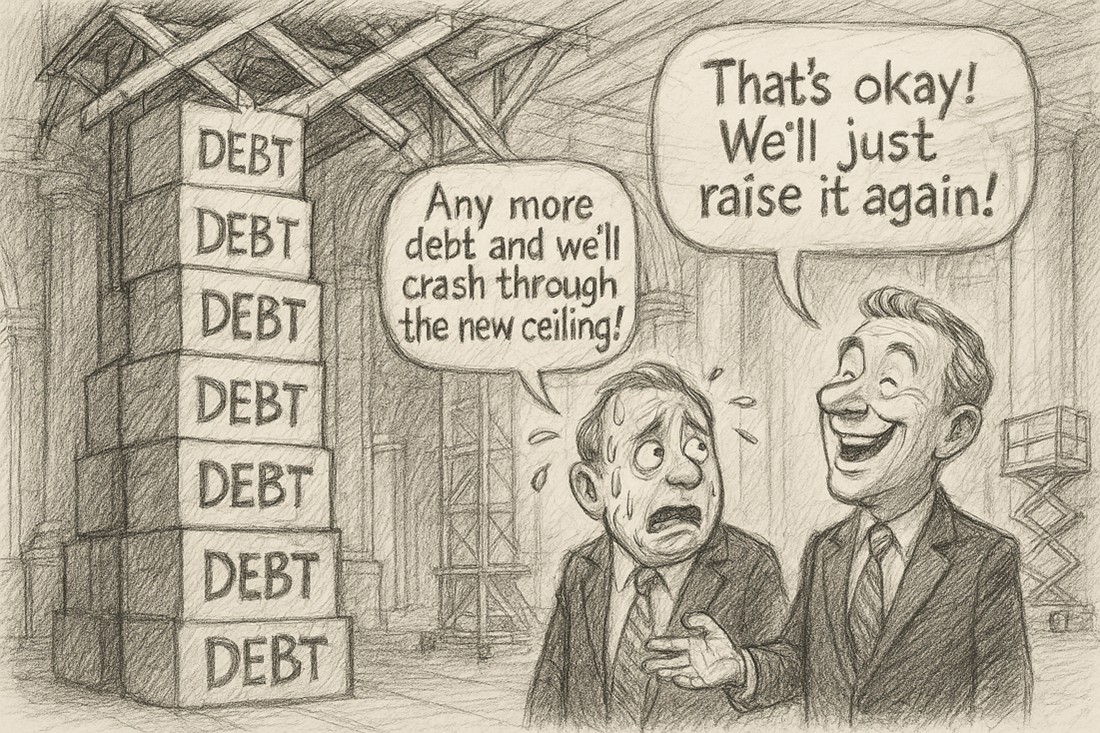
It’s why Congress has extended, suspended, or raised the debt ceiling — its self-imposed legal borrowing limit — nearly 80 times since 1960.
To put it simply, as former President Ronald Reagan said, “We’ve tried the carrot, and it failed.”
A balanced budget amendment is the stick.
It does what one Congress can’t do alone — provide a predictable framework able to withstand the shifting powers of the legislature, partisan brinkmanship, corporate pressure for handouts, and other temptations that have led our country down a bad fiscal path.
America is on the brink of a debt crisis.
In the next year, national debt held by the public is projected to exceed 100% of the gross domestic product for the first time in eight decades — meaning America will owe more to outside investors than our economy can produce in a single year.
The federal budgeting process has become so broken and political that the government was shut down for more than a month this fall.
We deserve a legislature that works for the American people.
That’s why AFP launched the “Make Government Work” campaign, a commonsense agenda to increase government accountability and efficiency.
You can help. Sign this petition to show Congress you support these reforms.
© 2026 AMERICANS FOR PROSPERITY. ALL RIGHTS RESERVED. | PRIVACY POLICY
Receive email alerts to learn how to get involved