
When the founders wrote “Life, Liberty, and the Pursuit of Happiness” into the Declaration of Independence, they weren’t guaranteeing comfort, equality of outcome, or a government-managed society.
They were making a bolder claim that became the foundation of the American Dream: that people could build meaningful lives if government protected liberty and then got out of the way.
That idea still matters today.
At its core, the phrase shows trust in the American people. The founders believed individuals, given freedom and responsibility, could make better choices for their lives than distant officials ever could.
Perhaps more important is the idea that, as adults who are created equal, we have inherent dignity that must be recognized by our government. When this dignity is recognized, we can truly thrive as humans and give our best to our families, communities, and workplaces.
The government’s role was not to create happiness, but to protect people’s freedom and property, making happiness and the American Dream possible.
As Thomas Jefferson put it in his inaugural address:
“A wise and frugal government, which shall restrain men from injuring one another, shall leave them otherwise free to regulate their own pursuits of industry and improvement.”
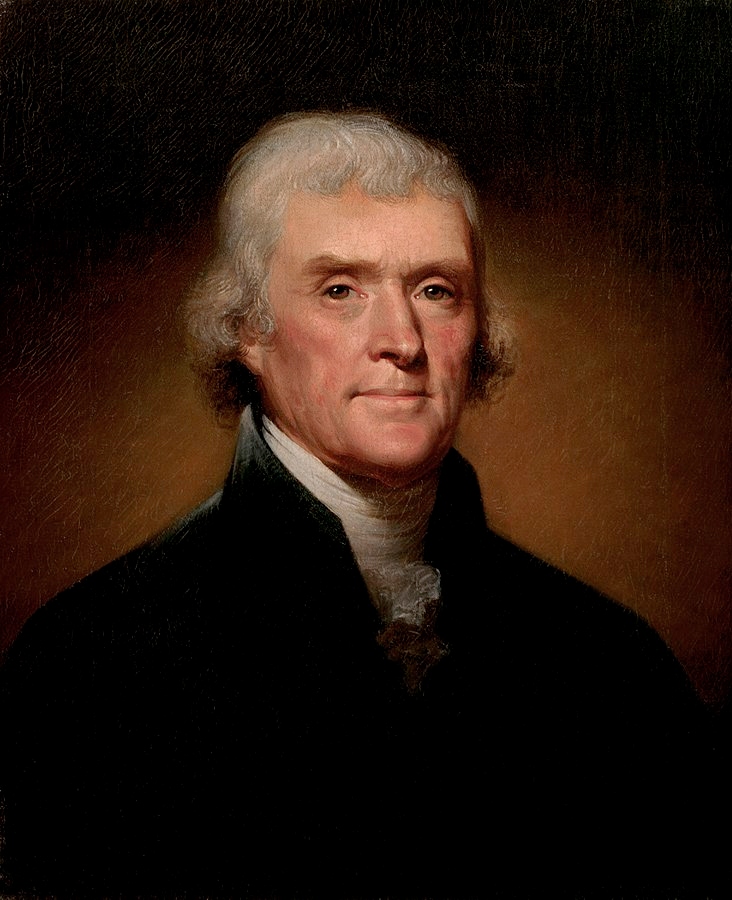
America’s new government was simple at the time.
It was supposed to:
- Protect rights
- Enforce laws equally
- Let people live according to their values and aspirations
This idea that happiness is rooted in objective truth and a recognition of natural rights is connected to the “Laws of Nature and of Nature’s God” line in America’s Declaration.
Thomas Jefferson didn’t emphasize the Pursuit of Happiness line for superficial, hedonistic reasons, but because he followed the ideas of John Locke and classical liberalism, which said that all men had rights simply because they were created.
Self-government was the point
The founders were wary of a government with too much power for a reason. Under British rule, they had no say in taxation, faced restrictions on trade, and dealt with a government across the world.
The solution wasn’t mob rule, but self-government.
That meant laws made closer to the people. Local leaders tend to know what families and communities need better than distant rulers.
Local rule meant citizen participation in voting, juries, and local institutions. This was risky, but the American founders believed it was worth it.
They understood that a central, all-powerful state was far more dangerous than individuals left to pursue their own happiness.
As Patrick Henry said,
“The Constitution is not an instrument for the government to restrain the people, it is an instrument for the people to restrain the government.”
Henry wasn’t calling for the government to enforce morality, but to allow people to pursue their own futures in the ways they saw fit, with the Constitution and Bill of Rights in place as checks on the government’s power.
Life, Liberty, and the Pursuit of Happiness means opportunity
Part of the American Dream is the promise of equal rights, not equal results.
That distinction matters today.
A government that protects opportunity enforces fair laws, guards free speech, defends property rights, and treats citizens equally. A government that forces outcomes picks winners and losers — replacing universal, individual rights with elite privileges.
This idea of individual liberty shows up in everyday life:
- Economics: In a centrally planned economy, the government decides what gets made and who makes it, rather than allowing families and entrepreneurs to take chances, innovate, and pass down generational wealth.
- Education: Local communities and families know their students’ needs and wants far better than bureaucrats in Washington, D.C. Allowing parents to direct their children’s education according to their values and needs ensures competition and choice.
- Entrepreneurship: Low taxes and regulations on businesses mean that entrepreneurs are empowered to start ventures, take risks, and provide real value for their communities — and the country. When taxes and regulations are too burdensome, many entrepreneurs close shop, decide against expanding, or don’t open their business in the first place.
Allowing for choice and the freedom to pursue happiness in all areas of life means that not everyone will succeed — but everyone gets the chance to try. Americans are free to fail, learn, and stand back up, stronger than before.

Even well-intentioned government programs often drift from protection to control and micromanagement.
The founders’ approach today
The founders understood something we often forget: Happiness cannot be handed down. It must be pursued.
That pursuit requires freedom — rooted in truth about who we are, what we owe one another, and the limits of government power. Every generation is tested on whether it will use that freedom well.
The American Dream has endured not because it guarantees outcomes, but because it entrusts people with individual responsibility. When citizens take that responsibility seriously, our nation moves closer to its founding ideals.
That is the great American experiment.
And it continues every time one person takes one small step to live out the principles that made this nation possible.
That’s why, this February, we invite Americans to reflect on what the American Dream means in 2026 and beyond.
By signing up for our toolkit, you can participate in February’s events and receive monthly stories and activities, all reflecting on our founding principles for America’s 250th anniversary.
You can also share your story about how you embrace Life, Liberty, and the Pursuit of Happiness as part of the American Dream.