


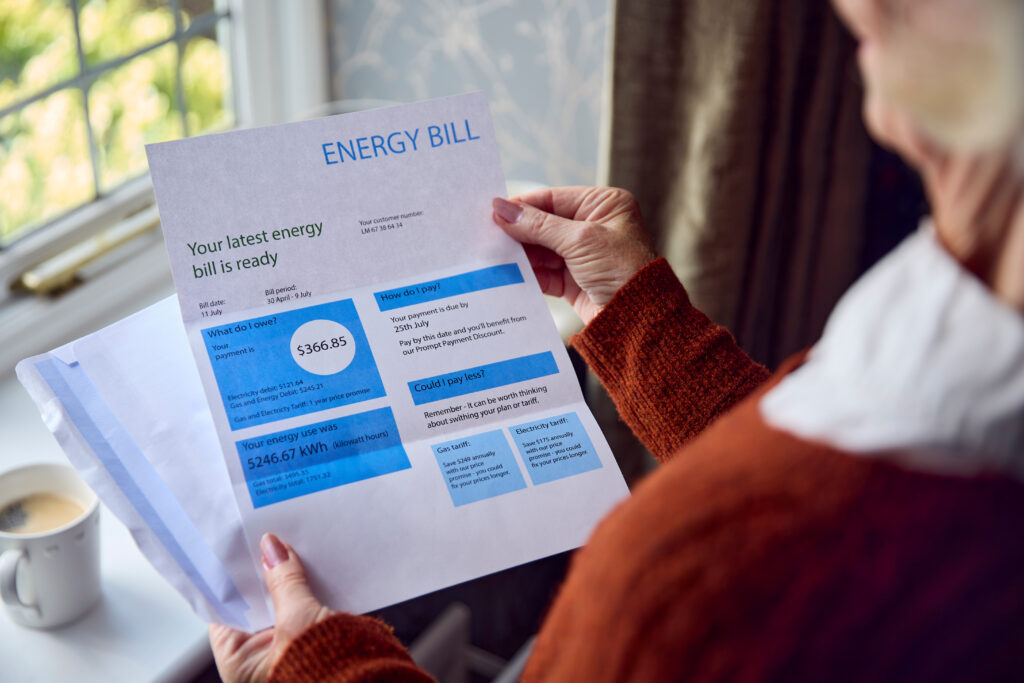
The cost of living is too high, and Americans are looking for answers.
One political movement believes the answer starts with more government: more subsidies, more regulation, more price-setting, more top-down policies.
A freedom-centered playbook asks a different question: What is stopping people from producing more, competing more, and making more choices for themselves?
Then it removes those barriers.
That’s how we lower costs and create abundance — by expanding supply, encouraging competition, and putting decisions back in the hands of individuals and families.
How to lower energy costs: Build more energy

Electricity demand is rising, but Washington has made it too difficult to build the infrastructure needed to unleash energy abundance.
Electricity prices have increased 21% since 2020, while approvals for new transmission lines take more than four years on average and can stretch to 11 years before construction begins.
The answer to higher energy costs isn’t more subsidies or government price-setting, but more energy production.
Congress should reform permitting laws, including the National Environmental Policy Act, the Clean Water Act, and the Clean Air Act, so projects can move faster. Policymakers should also modernize rules that slow the replacement of aging grid infrastructure.
Less red tape means more generation, more transmission, and more competition to meet growing demand.
Competition beats control. More energy supply can help lower costs and improve reliability without giving government more power over how Americans produce and use energy.
How to lower health care costs: Put patients in control

America has world-class doctors and technology, yet roughly 7 in 10 Americans say the health care system has major problems.
One reason is that patients rarely control the money.
About 90% of health care spending flows through insurance companies or government programs instead of directly through patients. That weakens price competition and makes it harder for families to see what care actually costs.
When patients control more of their health care dollars, providers have to compete harder on price, quality, and service for their business.
That’s why we support letting every American use a tax-free health savings account and directing eligible government support into those accounts rather than sending it to insurers first.
Congress should also remove barriers to direct primary care and other health insurance alternatives.
Competition beats control because when patients have real choices, providers compete harder. When this happens, providers deliver better care at a better price.
How to lower housing costs: Let communities build more homes

Housing costs rise when government stops supply from meeting demand.
Zoning rules can restrict where homes are built, how many homes can fit on a property, and what kinds of housing are allowed. Federal mandates can add construction costs on top of those local restrictions.
Rent control tries to manage scarcity. More housing reduces it.
States and cities can allow more multifamily housing, reduce minimum lot-size rules, remove unnecessary parking mandates, and make manufactured housing easier to build.
Congress can also reduce federal construction mandates and encourage local reforms through existing housing programs.
Competition beats control. When more homes reach the market, renters and buyers have more choices, which will lead to lower housing costs.
How to lower grocery prices: Remove costs and increase competition
The price of food at the grocery store isn’t arbitrary.
Farmers need fuel and fertilizer. Processors need electricity. Products need packaging, refrigeration, trucking, and shipping. When government raises costs at any step, families eventually see them at checkout.
In 2024, just 18.5 cents of every dollar spent at the grocery store went to farmers. The other 81.5 cents covered processing, transportation, retailing, and the other steps needed to get food onto store shelves.
The other problem is lack of competition.
New grocers, food producers, distributors, and other entrepreneurs can challenge existing businesses with better products or lower prices.
But permits, licensing, zoning, and other rules can make starting a business expensive and slow.
Competition beats control because lower prices come when people can produce, sell, and compete, not from government price-setting.
A freedom-centered plan to lower the cost of living
These policies address different parts of the economy, but they follow the same idea:
- Build more
- Compete more
- Give people more control
A socialist, top-down economic model tries to manage scarcity. A freedom-centered model creates the conditions for abundance.
Less red tape. More supply. More competition. More freedom to build.
That’s how we lower costs, expand opportunity, and put more decisions back in the hands of individuals and families.
There’s a particularly popular socialist in New York City right now. Maybe you’ve heard of him? Mayor Zohran Mamdani. His policies are unworkable in the long run, and this op-ed written by AFP spokeswoman and vice president of external affairs Katelyn Bledsoe, which ran in the Washington Examiner explains why.
Take a few minutes to read it today.
Also, if you care about our country’s future, join our fight against socialism today!