September Toolkit

We The People

This Constitution Day, take one small step to understand the document that protects our freedom.

On September 17, 1787, 39 delegates gathered in Philadelphia to sign the United States Constitution. The document they produced did more than establish government offices and institutions. It created a framework for self-government under law — one designed to divide political power, restrain its exercise, and preserve the liberty of the people.

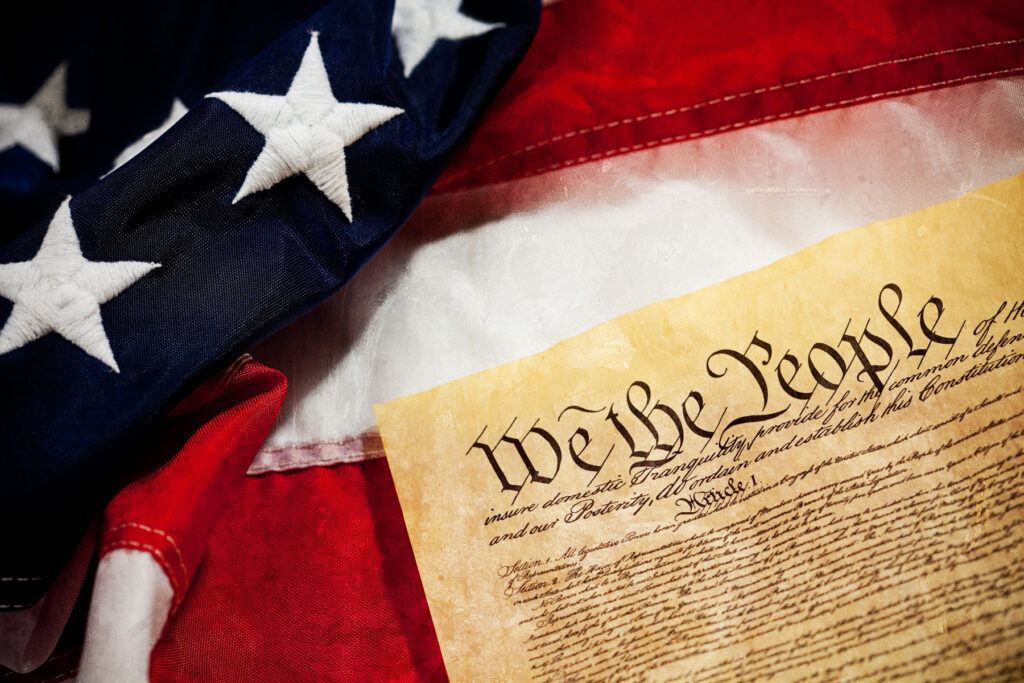
The U.S. Constitution "We the People" preamble beneath an American flag

And it begins not with a king, a legislature, or a judge, but with three words:

“We the People.”

Those words capture a revolutionary principle: in America, legitimate government derives its authority from the people it serves.

This Constitution Day, take a few minutes to read the Preamble, explore the principles behind it, and reflect on the role each of us plays in preserving our American experiment.

The Constitution can endure only if Americans understand the principles it was written to preserve.

This Constitution Day, join Americans across the country in returning to the document itself.

Take the pledge

1,275 people have read the preamble

After you pledge, invite a friend or family member to join you this Constitution Day.

Read the Preamble

We the People of the United States, in Order to form a more perfect Union, establish Justice, insure domestic Tranquility, provide for the common defence, promote the general Welfare, and secure the Blessings of Liberty to ourselves and our Posterity, do ordain and establish this Constitution for the United States of America.

Explore what the Constitution means

Civic Duty · Limited Government

The Constitution begins by locating political authority where the Founders believed it belonged: with the people.

Government does not create the people’s rights, nor does political authority exist for its own sake. Public officials exercise powers entrusted to them by citizens within the limits of the Constitution.

Self-government therefore places responsibilities on both government and the governed.

Rule of Law · Dignity

Liberty cannot survive where laws depend on who you are or who you know.

The rule of law requires government itself to operate under law and recognizes that every person possesses equal dignity before it.

A constitutional republic replaces arbitrary power with laws that are known, durable, and applied consistently.

Civic Duty

The Constitution was written by men who understood that self-government would never be effortless.

The phrase “more perfect” acknowledges that the work of maintaining a free republic is never finished. Each generation inherits institutions it must preserve, strengthen, and pass on.

Citizenship is therefore more than the possession of rights. It carries responsibilities as well.

Freedom · Limited Government

The Constitution does not promise that government will direct every aspect of American life.

Instead, its structure limits and divides political power so that individuals may exercise their liberty — speaking, worshipping, associating, building, creating, and pursuing their own path.

The Founders understood that liberty is safest when power is constrained.

Opportunity · Dignity

A free government exists to establish conditions in which people can flourish—not to dictate the lives they must lead.

When rights are secure and laws are applied fairly, individuals are free to pursue opportunity, contribute their talents, and build better lives for themselves and their communities.

The promise is not equal outcomes. It is the freedom to pursue the good life.

Civic Duty · Freedom

The Constitution was written not only for the generation that ratified it, but for those who would follow.

Freedom is an inheritance — but not an automatic one.

Each generation bears responsibility for understanding the institutions of self-government and preserving the principles that make liberty possible for the next.
How well do you know the preamble?

You’ve read the words. Now put them back together.

The Preamble has endured for more than 250 years because its language expresses a clear theory of American government.

Test your memory by placing its phrases in the correct order.

Play the Preamble Order Challenge(opens in new window)

Go deeper: get your free constitution ebook

The best way to understand the Constitution is to read it.

Go beyond the Preamble with a digital edition of the United States Constitution, including the original articles and amendments that continue to govern the nation today.

Already took the pledge? Consider this your next small step.

Get the Free Constitution eBook(opens in new window)
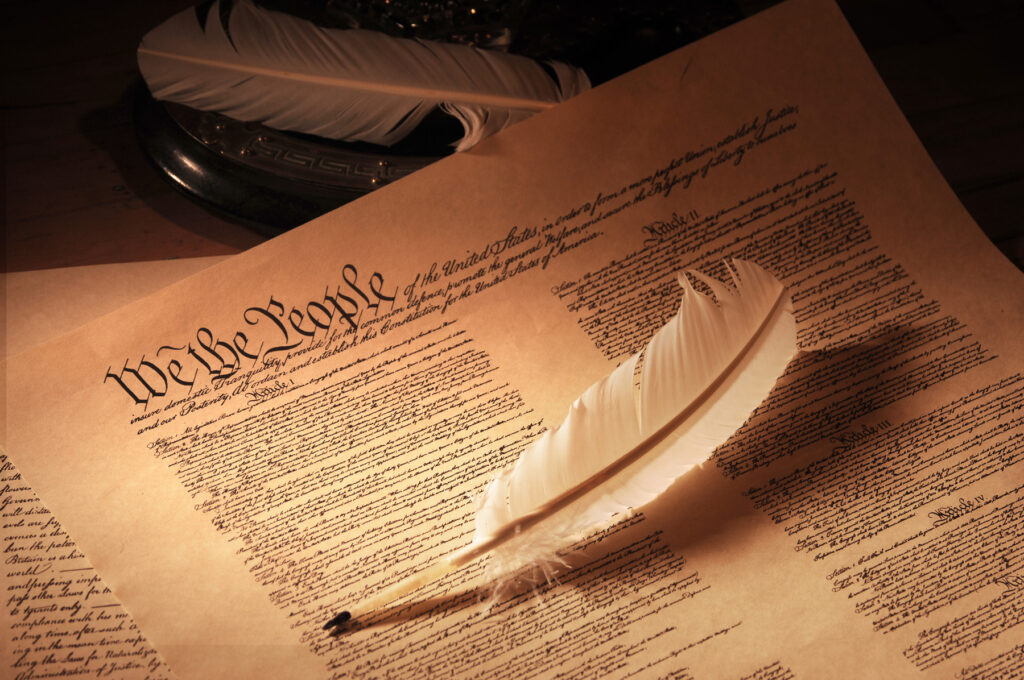
A quill pen resting on the U.S. Constitution

Share the pledge

Self-government depends upon citizens willing to understand the country they have inherited.

Invite your family, friends, students, coworkers, or neighbors to read the Preamble with you this Constitution Day.