Discover your Collection
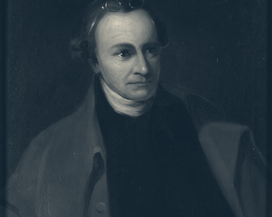
Patrick Henry gave voice to the conviction that liberty is worth sacrifice. In 1775, addressing the Virginia Convention, he urged his fellow citizens to defend their natural rights against British overreach.
Rooted in the belief that government derives its authority from the consent of the governed, Henry’s words stirred a hesitant assembly toward action. His courage demonstrated that self-government depends on citizens willing to speak clearly when liberty is at stake.

“I know not what course others may take; but as for me, give me liberty or give me death!”
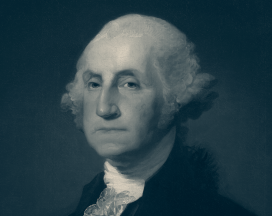
Washington’s greatness rested not only in victory but in restraint. Guided by the Federalist ideal of government by consent, he modeled civic duty by relinquishing power voluntarily and elevating principle above ambition.
His two-term precedent and Farewell Address defined service as stewardship. Washington believed in a republic sustained by citizens who govern themselves before governing others.
"The preservation of the sacred fire of liberty, and the destiny of the republican model of government, are justly considered as deeply, perhaps as finally staked, on the experiment entrusted to the hands of the American people."
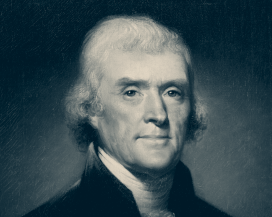
Jefferson gave liberty its American vocabulary. In drafting the Declaration of Independence, he declared that all people possess the right to “Life, Liberty, and the pursuit of Happiness.”
He envisioned a nation where citizens, not rulers, chart their own course through knowledge, work, and ambition. Jefferson believed in intellect with independence, where free inquiry, enterprise, and limited government together secure human progress.
"I prefer dangerous freedom over peaceful slavery."
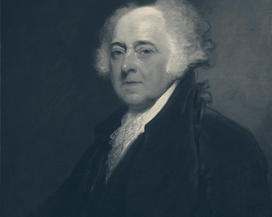
John Adams devoted his life to securing liberty through law and constitutional government. A leading voice for liberty, he helped guide the Continental Congress toward declaring American independence.
As diplomat and president, he defended republican principles during fragile early years of the nation. Adams believed liberty endures only in a government of laws, sustained by civic virtue, reasoned debate, and leaders willing to place principle above popularity.
“Liberty, once lost, is lost forever.”
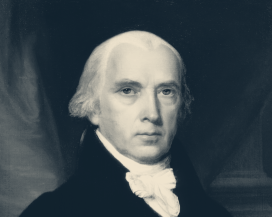
Madison designed a republic built on balanced power and protected liberty. He argued that government’s authority must be “few and defined” while citizens’ rights remain vast.
Through the Constitution and Bill of Rights, he built the legal scaffolding for ordered freedom. Madison argued for a system where ambition checks ambition, and law guards liberty. His design remains the living blueprint for self-government.
"The very definition of tyranny is to accumulate all powers... in the same hands, whether of one, a few, or many, and whether hereditary, self-appointed, or elective."
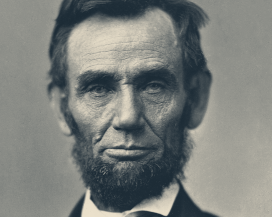
Lincoln fused the Declaration’s moral truth, that all are endowed with unalienable rights, with constitutional duty. He saw government’s highest role as securing liberty for all, not granting it to some.
Through perseverance and sacrifice, he preserved the Union and moved the nation toward emancipation. Lincoln believed in a government strong enough to defend freedom yet humble enough to answer to its principles.
"Our reliance is in the love of liberty which God has planted in us. Our defense is in the spirit which prized liberty as the heritage of all men, in all lands everywhere."
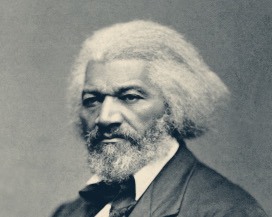
Born enslaved, Douglass taught himself to read and used his voice to proclaim that all people possess equal, God-given dignity. Drawing on the Declaration’s claim that “all men are created equal,” he argued that rights precede government and must extend to every American.
His life traced the promise of the American Dream—from bondage to authorship and influence. By educating himself, founding newspapers, and advising presidents, he embodied freedom earned through intellect and integrity.
"To suppress free speech is a double wrong. It violates the rights of the hearer as well as those of the speaker."
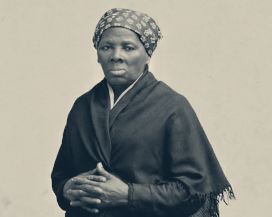
Tubman embodied the Declaration’s truth that liberty is a birthright, not a privilege. Escaping slavery herself, she risked capture and death to lead others to freedom, forging a living network of resistance and refuge.
Tubman stood for deliverance—the right to live as a free and equal soul under God. Through courage and conviction, she turned faith into action, transforming moral outrage into organized rescue.
"I was the conductor of the Underground Railroad for eight years, and I can say what most conductors can't say; I never ran my train off the track and I never lost a passenger."
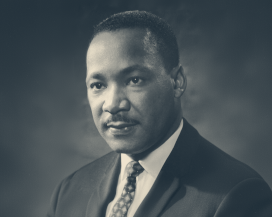
King’s nonviolent movement demanded that America’s laws live up to its founding creed. Invoking the First Amendment’s promise of free speech and the Fourteenth’s guarantee of equal protection, he appealed to both conscience and Constitution.
Through marches, boycotts, and courtroom battles, King sought justice applied equally and freedom shared universally. His dream was not for privilege but for participation.
"I have a dream that my four little children will one day live in a nation where they will not be judged by the color of their skin but by the content of their character."
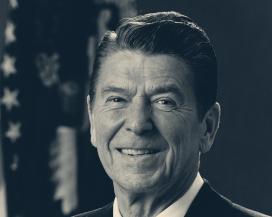
Ronald Reagan renewed America’s belief that liberty, not control, is the heart of progress. Echoing the Declaration’s truth that rights come from the Creator, he argued that government’s role is to protect freedom, not to grant it.
Reagan stood as a modern embodiment of optimism earned through effort. By calling on the world to “tear down this wall,” he cast freedom as both national mission and global hope.
Freedom is not a luxury but a necessity. Freedom to think, freedom to imagine and create, these are not privileges, but the very source of our life's bread and the hope of mankind's future.
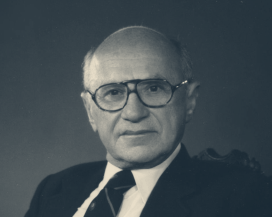
Friedman argued that free people and free markets solve more than bureaucracy ever can. Drawing from the Founders’ faith in limited, enumerated powers, Friedman showed how voluntary exchange expands opportunity and prosperity.
Friedman’s research gave economic freedom moral weight, proving that when government steps back, human creativity steps forward.
"A society that puts equality before freedom will get neither. A society that puts freedom before equality will get a high degree of both."
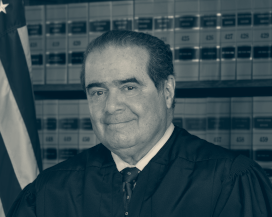
Scalia believed liberty endures only when law constrains power. Guided by Federalist No. 45, he championed a Constitution whose federal powers are “few and defined.”
Through his originalist philosophy, Scalia urged judges to interpret law as written, not as wished. Scalia believed in self-government protected by structure. Through his opinions and dissents, he reminded citizens that the separation of powers is not technical—it is freedom’s architecture.
"If you think the people are the ultimate source of power, you must give them the credit for the mistakes they make as well as the successes they achieve."