



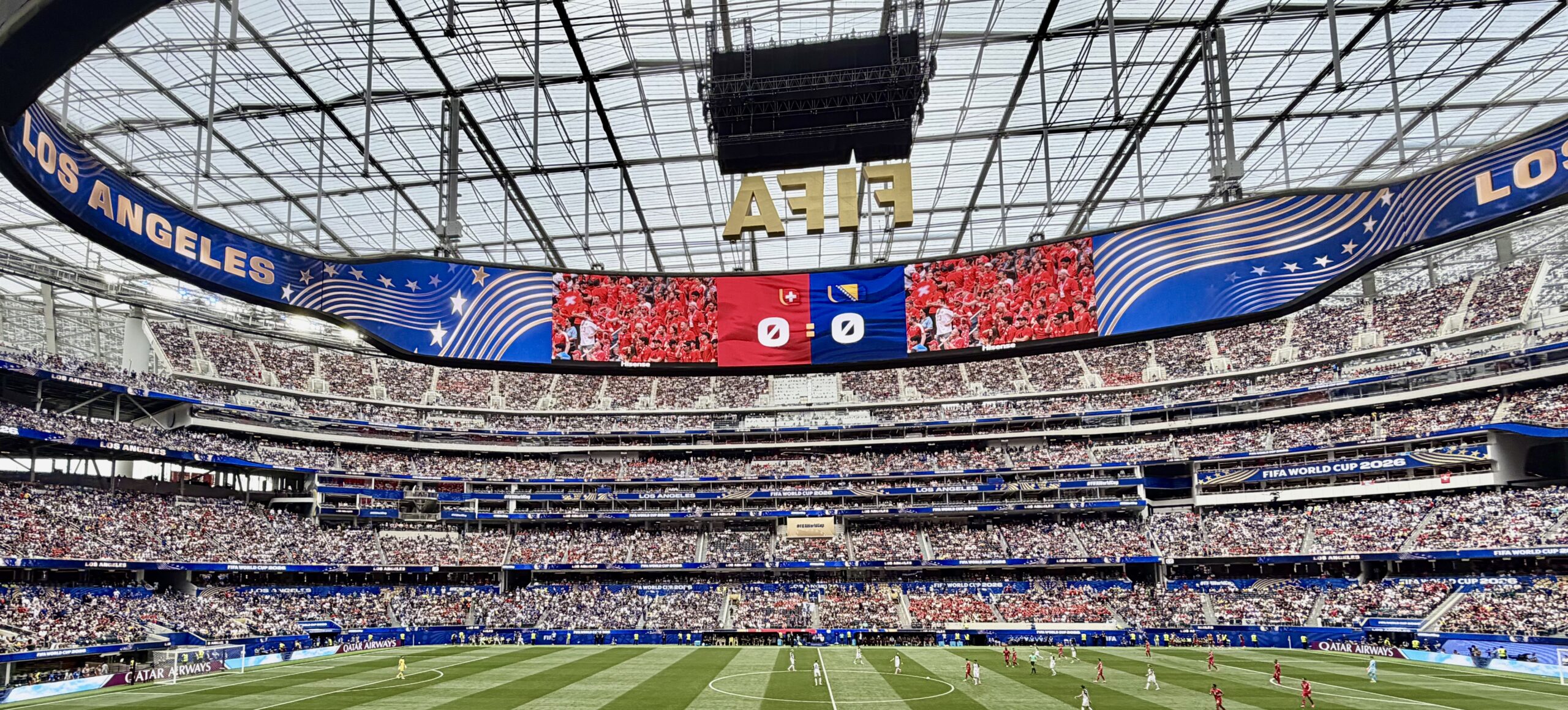
The World Cup came to America this summer. The world came with it. And it started posting.
International fans filled social media with reactions to the America they encountered: enormous supermarkets, pickup trucks, free refills, sprawling cities, and strangers eager to strike up a conversation.
The videos were entertaining. But they also captured something that Americans often take for granted.
For generations, people around the world have imagined America as a place of possibility. A place where, with a dream and hard work, you could make a better life for yourself and your family.
That image took hold because people saw it play out through family and friends who came here and built new lives.
It was made possible because America was founded on a distinct set of principles.
Dignity. Freedom. Opportunity. Rule of law. Limited government. Civic duty.
Those principles created the conditions for generations of Americans to dream bigger, take risks, solve problems, start businesses, build communities, and create the abundance that visitors still notice today.
That is part of what has made America a “shining city on a hill.”
What made it possible?
The things visitors notice about America are signs of a society where people have had room to build, create, compete, serve, and improve their lives.
Those enormous supermarkets? They reflect generations of entrepreneurs, farmers, truckers, retailers, and innovators responding to what people need and want.
The pickup trucks, highways, businesses, neighborhoods, and constant churn of new ideas? They are all part of a country where people have been free to take risks, own property, start something new, and pursue opportunity.
Even the willingness of strangers to strike up a conversation points to something deeper: a culture shaped by voluntary association, community, and civic participation.
Beneath it all are America’s founding principles.
- Dignity says every person has inherent worth.
- Freedom gives people room to think, speak, worship, work, and build.
- Opportunity gives people the chance to pursue their own version of the good life.
- Rule of law protects people from arbitrary power.
- Limited government leaves more decisions in the hands of individuals and communities.
- And civic duty reminds us that a free society depends on people who participate in it.
Those principles shaped America because generations accepted them and built their lives around them.

Progress starts from the bottom up
Again and again, progress has come from people who saw a need, recognized an opportunity, and were free to act.
The overflowing supermarket shelves, endless variety, sprawling businesses, and everyday conveniences they encountered were not designed by a single authority. They emerged over generations from people building, experimenting, trading, and improving on what came before.
Immigrants came in search of freedom and opportunity, then used both to build new lives and strengthen their communities. Entrepreneurs bet on ideas no one else could see yet. Neighbors formed institutions, served one another, and solved problems without waiting for Washington to do it for them.
America progresses when people are free to act and choose to step forward.
Take your small step and help carry it forward
America became a “shining city on a hill” because it is a beacon of freedom — a place where people could work hard, pursue opportunity, and build a better life for themselves and their families.

That promise was built over generations by people who took those freedoms seriously and put them to work.
They started businesses. Served their communities. Raised families. Took risks. Solved problems. Spoke up. And helped shape the country they wanted to leave behind.
Now it’s our turn.
As America marks its 250th anniversary this year, we have an opportunity to do more than celebrate what earlier generations built. We can carry forward the principles that made it possible.
That starts with one small step.
Visit the One Small Step toolkit to explore America’s founding principles and find ways to put them into action.