


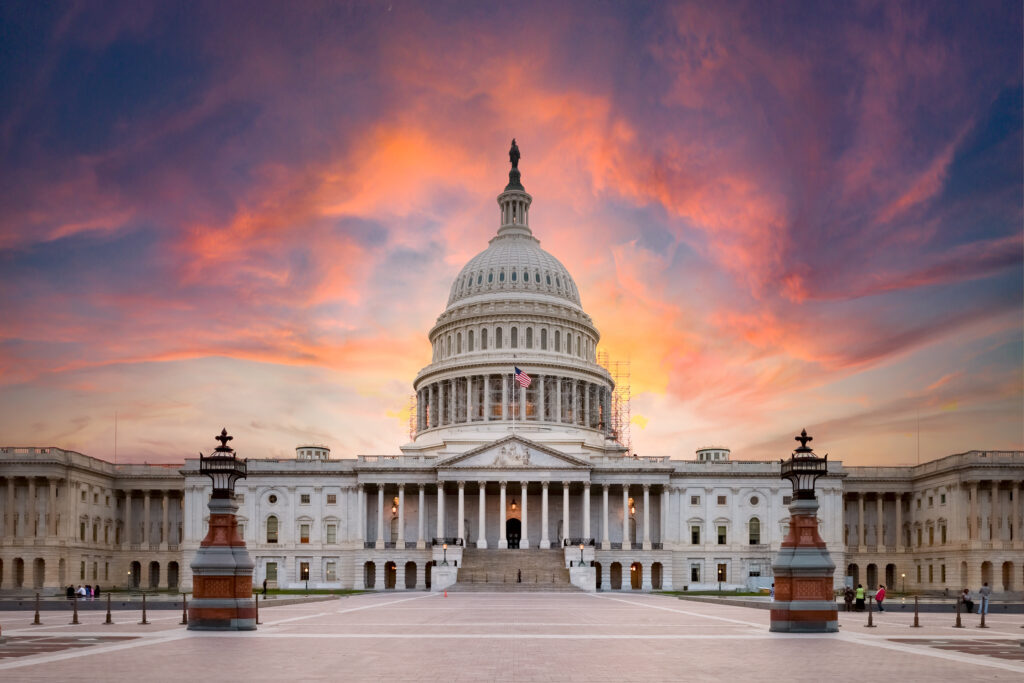
Congress is back in session, and it’s the end of the year. That means you’ll be hearing a lot about a continuing resolution.
What is a continuing resolution, exactly?
It’s temporary legislation that keeps federal agencies open even when Congress hasn’t approved their regular funding.
A continuing resolution avoids a shutdown, but it pushes real decisions down the road.
Think of it this way: A continuing resolution is like saying your family will keep spending at the rate it has been instead of making a new budget that reflects your changing needs.
It’s not a great way to budget, and Congress’ decision to use a continuing resolution, or CR, has serious implications for Americans and the economy.
1. What is a continuing resolution? A temporary spending bill
The federal government’s budget year runs from October 1 to September 30. If Congress hasn’t approved new spending bills by that deadline, funding for affected agencies runs out.
Each year, Congress tries to beat that clock by approving 12 different spending bills — also called appropriations bills — before October 1.
If Congress runs out of time, lawmakers have three choices:
- Let federal agencies affected by the yet-to-be-approved spending bills shut down
- Cobble together the 12 spending bills and pass an “omnibus” that provides funding for all agencies for a year
- Approve a continuing resolution
A CR imposes a new deadline by which Congress must approve the 12 spending bills. That deadline could be six weeks from now, or six months. It’s up to lawmakers to decide.
A CR also usually puts spending on autopilot at the previous year’s funding levels. Need more money for air traffic control? Under a CR, funding generally stays at last year’s levels unless Congress makes an exception.
With a CR, Congress avoids a government shutdown, but it also avoids making tough choices.
And it creates uncertainty for federal agencies and businesses.
2. Why a continuing resolution matters to you
Nearly two-thirds of voters, 61%, say the threat of government shutdowns makes it harder for the country to succeed.
They are right.
Government shutdowns create a lot of drama. While drama makes for good television, it wreaks havoc on the lives of everyday Americans and our country’s economy.
When the government shuts down:
- It’s harder for small businesses to get the permits and contracts they need to operate.
- Federal agencies cannot collect important economic data — data businesses rely on to guide hiring and investment decisions.
- Even though Medicare, Social Security, and veterans’ benefits aren’t supposed to lapse during a shutdown, the agencies that send out these benefits may have fewer employees available to process claims and answer questions.
Government shutdowns are expensive, too. The 2018–2019 government shutdown cost the American economy about $11 billion.

3. There’s a better way to keep government open
Federal lawmakers usually vote on CRs at the very last minute — late in the evening on September 30. Midnight deadlines may work in fairy tales, but in the nation’s capital, the scramble creates anxiety that has real costs.
It doesn’t have to be like this.
A bill called the Prevent Government Shutdowns Act offers a better way to budget. This legislation says if Congress misses its spending deadline, funding automatically continues at the same levels as the previous year.
No need for shutdown threats or panic.
The Prevent Government Shutdowns Act also requires lawmakers to remain in Washington until all 12 spending bills are passed. That’s meaningful. Lawmakers couldn’t leave to go on a trip or on the campaign trail until they’ve done the job you elected them to do.
States like North Carolina, Rhode Island, and Wisconsin have automatic measures like these — and they’ve worked, enabling a stable budget process that creates certainty, not anxiety.
More than three-quarters of Americans say they’d like to see Congress approve legislation like the Prevent Government Shutdowns Act.
It’s time to end the drama and change the way budgeting works in Washington. Learn more.