GRASSROOTS INTELLIGENCE REPORT
|
Edition 4 | November 2026
|
|
|
|
Americans for Prosperity has one of the largest grassroots operations in the country. AFP speaks to hundreds of thousands of voters in person, in their communities, all across America.
Americans Unscripted is what we’re hearing. Each month we report on what’s actually top of mind for voters, drawn straight from those conversations. This edition reflects 421,372 of them, gathered across eight states from July 16 through November 4, 2026.
|
|
|
COST OF LIVING WAS VOTERS’ TOP CONCERN ALL YEAR.
|
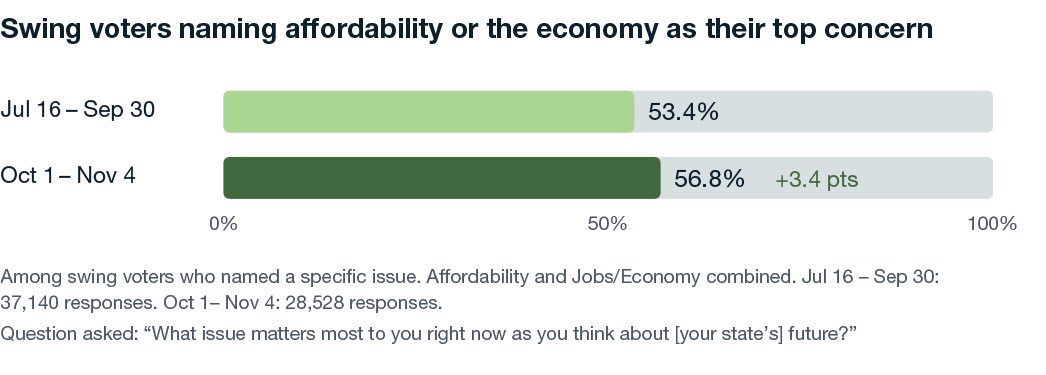
Cost of living was the top concern in our conversations with voters all year. Heading into Election Day, it mattered even more. Among the swing voters we spoke with, 53.4% named affordability or the economy as their top concern from July 16 through September 30. From October 1 through Election Day, 56.8% did.
|
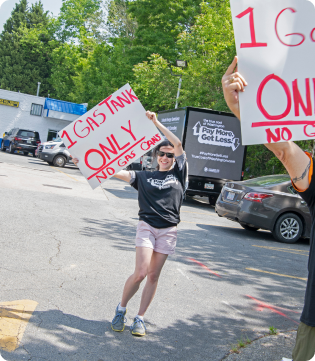
Genine from Wichita KS told our canvasser: “Gas, bills, it’s everything, man. I can’t even pay to drive my own car right now. It’s just getting really hard.”
Why it matters: Concern about costs was rising at the same time Republicans were losing trust on the issue, as the Wisconsin data below shows. In AFP’s post-election survey, 79% named the cost of living as a factor that hurt Republican candidates, more than any other.
|
|
|
|
IN WISCONSIN, SWING VOTERS TRUSTED REPUBLICANS ON THE COST OF LIVING, UNTIL THEY DIDN’T.
|
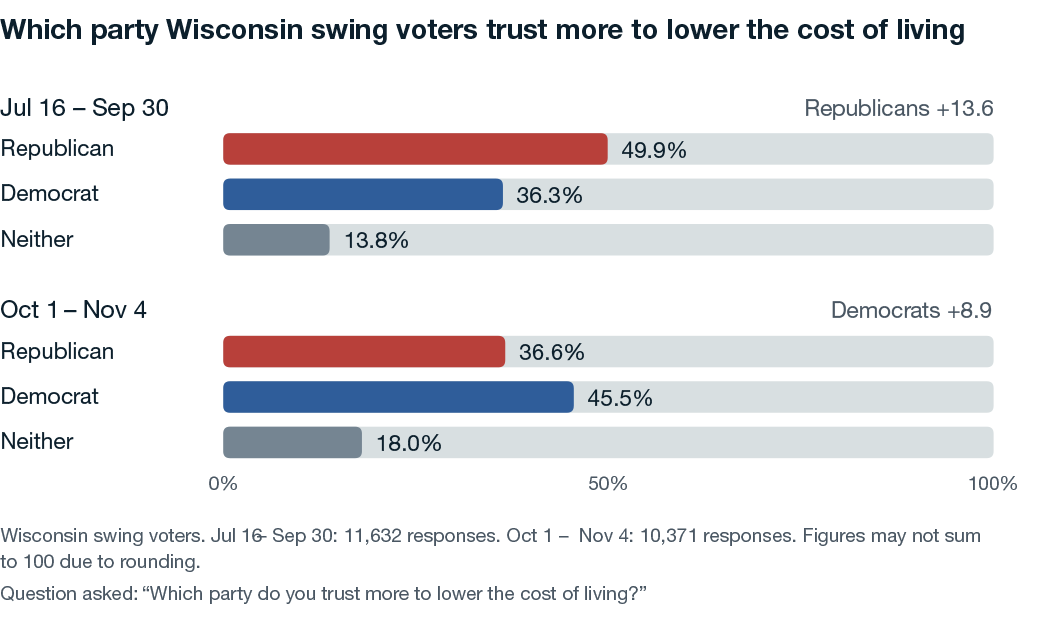
Through the summer, the Wisconsin swing voters we spoke with trusted Republicans more than Democrats to lower the cost of living. From July 16 through September 30, Republicans led 49.9% to 36.3%, a 13.6-point edge. From October 1 through Election Day, that flipped. Democrats led 45.5% to 36.6%, an 8.9-point edge. That is a 22.5-point swing from one period to the next.
|
Happening at the same time: gasoline rose 9.1% in September, and headline inflation reached 3.7%. Housing, used cars, and clothing prices all rose in the same month, too. And on September 16, the Federal Reserve raised interest rates for the first time in more than three years.
People at the doors rarely brought up the Fed or consumer price index, but the consequences of these developments combined with rising prices across the board created the conditions for swing voters to reconsider which party they trusted more to make life in America more affordable.
In other words, prices were spiking just as undecided voters were making up their minds. The result was a decisive rejection of the status quo.
|
|
|
|
THE RACE THAT HAD EVERYONE TALKING
|
IN MICHIGAN, DOUBTS ABOUT DSA DIDN’T CHANGE THE VOTE.
|
The Michigan Senate contest between Mike Rogers and Abdul El-Sayed drew more national attention than almost any race this cycle, in both national media and social media.
Affordability held steady as the top concern for the Michigan swing voters we spoke with. From July 16 through September 30, 41.1% named affordability specifically as their top issue. From October 1 through Election Day, 41.2% did.
Daynelis, a canvasser with LIBRE and AFP in Michigan said, “After listening to voters, they say their main concern is gas, the rise of living costs, inflation, and the fact that they have a full-time job and still can’t make ends meet.”
At the same time, the Democratic Socialists of America made their play for Michigan’s swing voters, and Michigan swing voters were not drawn in. From October 1 through Election Day, three in five (61.3%) viewed DSA unfavorably, up from 57.0% from mid-July through September. Unfavorable views outnumbered favorable ones roughly three to one in both periods.
El-Sayed’s 7-point victory was not a warming toward socialism; it was a call for change on Congress’s handling of the economy.
|
|
|
|
THE ANSWER VOTERS NEEDED WAS NOT OFFERED BY MOST REPUBLICAN CANDIDATES.
|
|
|
|
Through the summer, swing voters gave Republicans the benefit of the doubt on the economy. They were waiting for a plan: a coherent case for how costs would actually come down for people living on a budget.
They watched gas sit at or above $4 a gallon for nearly 180 days, and they wanted to know what a Republican-controlled Washington would do about it. Some Republican candidates, like Ashley Hinson in Iowa, made lowering costs a central message. But in too many races, opposing DSA was the closest thing to an affordability plan voters got; by the fall, many swing voters in states like Wisconsin had concluded that Republicans didn’t have one. On the issue that mattered most to them, their trust shifted to Democrats.
In Michigan, El-Sayed offered a plan: government-run health care, rent control, and public ownership. Importantly, it is not what voters at the doors asked for (77% view free enterprise favorably; just 43% view socialism favorably), but it promised relief voters could picture. Ultimately, the national economic environment combined with mixed messages from the GOP was too much for most candidates to overcome – and voters broke against the party in charge.
Of course, the new Congress will have to decide how it governs. Will it be pulled to the extremes of its socialist progressive base, or will it focus on delivering the results Americans are demanding? We believe that the right way to bring costs down is more competition, more supply, and less government standing in the way. That is the case AFP will keep making, with anyone willing to make it.
|
|
|
|
WHAT CONGRESS SHOULD DO NOW
|
THE OPPORTUNITY BEFORE CONGRESS THIS DECEMBER.
|
Republicans run Congress until January 3, meaning 40 days left to act on behalf of the American people before the Democrat majority takes over. Here’s what can and should be accomplished now:
|
- Finish permitting reform.
- Take up the Take Care of America’s Veterans Act.
- Fund the government without adding to spending.
|
|
|
|
4201 Wilson Blvd., Suite 1000, Arlington, VA 22203
|
Americans Unscripted reflects in-person conversations with voters conducted by AFP staff and volunteers across battleground states. It is not a scientific poll.
Swing and Republican-leaning audiences are defined by i360 propensity modeling, not by party registration.
|
© 2026 AMERICANS FOR PROSPERITY. ALL RIGHTS RESERVED. | PRIVACY POLICY
|
|
|
|
|